Choosing a High Torque Brushless Dc Motor supplier in China involves more than comparing headline torque figures. Buyers must consider rated speed, voltage range, thermal limits, control compatibility, and expected service life. A motor may perform well on a test bench yet struggle inside a compact machine with limited cooling. The application matters.
This guide introduces ten Chinese manufacturers for closer evaluation. It considers product focus, engineering capabilities, customization options, manufacturing experience, and the clarity of available technical information. These points help readers build a shortlist, but they do not replace direct supplier checks. Request current datasheets, drawings, test conditions, and information about quality-control procedures. Ask how torque is measured, too. Different test setups can produce figures that look comparable but are not.
Small details matter.
For a fair comparison, match each motor to the actual load, duty cycle, installation space, and controller. Review communication during technical discussions and confirm what support is available after delivery. Claims about efficiency, noise, or service life should be supported by relevant test data, not just a product page. No ranking can fit every application. That is worth remembering. A manufacturer suited to a packaging line may not suit a medical device or an outdoor system. Use this overview as a starting point, then validate each candidate against your design requirements and operating conditions.
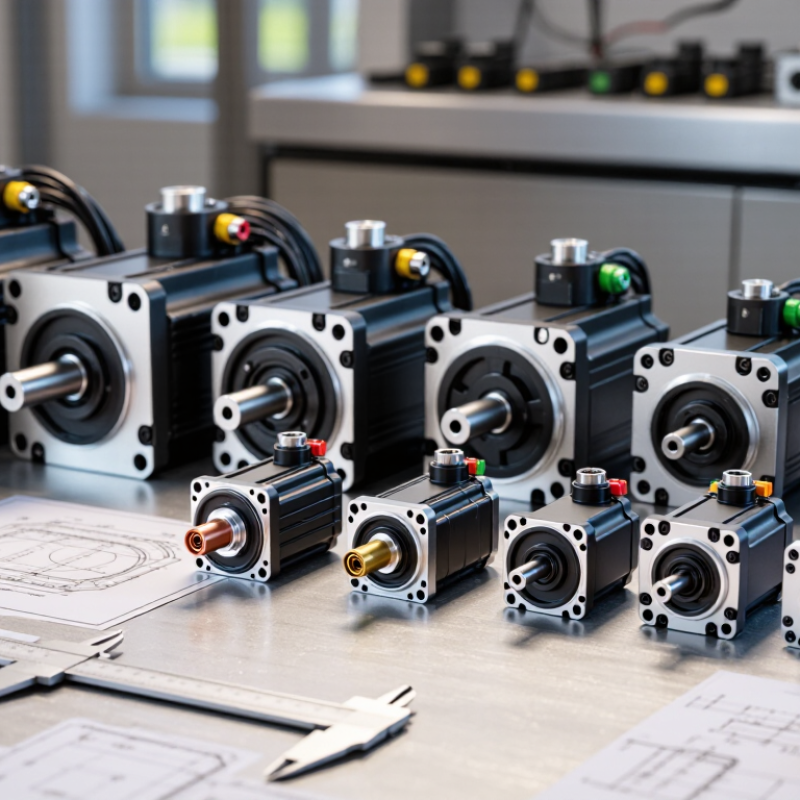
High-torque brushless DC motors deliver substantial turning force from a compact package. They use permanent magnets on the rotor and electronically switched windings in the stator. With no brushes rubbing against a commutator, they typically need less routine maintenance than brushed designs. Quiet operation helps, too.
Torque depends on more than motor size. Winding current, magnetic design, and cooling all matter. A motor may produce strong peak torque for a brief start, yet struggle to hold that load continuously. Heat is the catch. In practical selection, engineers compare continuous and peak torque ratings, speed range, supply voltage, and controller current limits. A gearbox can increase output torque, but it adds bulk, noise, and some losses. More torque is not automatically better.
At low speeds, smooth control is especially important. Hall sensors or encoder feedback can help the controller maintain position and respond to changing loads, such as a conveyor starting with a full package. Sensorless control may suit simpler applications, though startup performance can be less predictable. Check the mounting dimensions and shaft details. They are easy to overlook. A real trade-off. Actual results still depend on installation, airflow, and load cycles, so a datasheet alone may not tell the whole story.
China’s high-torque brushless DC motor manufacturing landscape is shaped by demand from automation, mobile equipment, and compact drive systems. The China Association of Automobile Manufacturers reported 9.59 million new-energy vehicles produced in China in 2023. This signals a large electrification ecosystem, but it does not measure BLDC motor output directly. That distinction matters.
The International Energy Agency’s Global EV Outlook 2024 estimated that China accounted for nearly 60% of global electric car sales in 2023. This scale supports investment in motor components, controls, and production capacity. Yet high torque depends on more than a larger motor. Winding design, magnetic materials, thermal paths, and controller matching all affect usable torque. A motor may deliver impressive peak figures briefly, then lose output as its housing heats.
For buyers, supplier comparisons should include continuous torque, duty cycle, operating temperature, and test conditions. Ask for torque-speed curves and thermal test records, not just catalog headlines. The gap is real. Supplier capabilities also vary by application, production volume, and customization needs. Public industry statistics rarely separate high-torque BLDC units from other motor types, so market-size claims deserve careful scrutiny. Reliable evaluation often starts with a sample, a defined load, and repeated measurements.
| China Top 10 High Torque Brushless DC Motor Manufacturers - China’s High-Torque Brushless DC Motor Manufacturing Landscape | |||||||
|---|---|---|---|---|---|---|---|
| An anonymized comparison of common high-torque BLDC motor configurations and manufacturing capabilities. The entries are product-category benchmarks, not company rankings. | |||||||
| No. | Motor / Drive Configuration | Typical Supply Voltage | Indicative Output Torque | Typical Output Speed | Common Feedback Options | Typical Applications | Relevant Manufacturing Capability |
| 1 | BLDC motor with planetary gearbox | 12, 24 or 48 V DC | Approximately 1–100 N·m, depending on motor and gear ratio | About 10–1,000 rpm at the gearbox output | Hall sensors; optional encoder | Automation equipment, powered mechanisms and compact mobile platforms | Gearbox integration, ratio selection, shaft and mounting customization |
| 2 | BLDC motor with spur gearbox | 12, 24 or 48 V DC | Approximately 0.5–50 N·m | About 10–1,000 rpm at the gearbox output | Hall sensors; optional encoder | Small conveyors, access systems and consumer or commercial machinery | Compact gearmotor assembly and application-specific output interfaces |
| 3 | BLDC motor with worm gearbox | 12, 24 or 48 V DC | Approximately 2–100 N·m | About 5–300 rpm at the gearbox output | Hall sensors; optional encoder | Actuators, positioning systems and low-speed mechanisms | Worm-wheel matching, reduction selection and assembly testing |
| 4 | Direct-drive BLDC motor | 24, 48 or higher-voltage DC bus | Typically below 1–50 N·m, depending on frame size and design | From near-zero speed to several thousand rpm, depending on control | Hall sensors, incremental encoder or resolver | Rotary tables, fans, pumps and applications where low backlash is important | Electromagnetic design, rotor balancing and precision assembly |
| 5 | BLDC motor with planetary gearbox and encoder | 12, 24 or 48 V DC | Approximately 1–100 N·m, depending on the selected gearhead | About 10–1,000 rpm at the gearbox output | Incremental encoder; Hall sensors for commutation | Closed-loop positioning, robotics and automated material handling | Motor, gearhead and feedback-device integration with calibration options |
| 6 | BLDC servo motor with planetary gearbox | 24, 48 or higher-voltage DC bus | Approximately 0.5–100+ N·m at the gearbox output, depending on sizing | Application-dependent; selected for controlled speed and position | Encoder or resolver; compatible servo drive required | Industrial automation, robotics and precision motion systems | Servo winding, feedback alignment and motor-drive matching |
| 7 | BLDC gearmotor for electric actuators | 12, 24 or 48 V DC | Approximately 1–100 N·m at the rotary output | Typically low to moderate output speed | Hall sensors, limit switches or encoder | Linear actuators, adjustable platforms and automated equipment | Customized mounting, output coupling and end-of-line functional testing |
| 8 | Sealed BLDC gearmotor | 12, 24 or 48 V DC | Approximately 0.5–50 N·m, depending on enclosure and gearing | Application-dependent; often reduced through gearing | Hall sensors; optional encoder | Outdoor equipment, washdown-prone machinery and enclosed mechanisms | Sealing design, connector selection and environmental validation |
| 9 | BLDC motor with integrated controller and gearbox | Commonly 12, 24 or 48 V DC | Approximately 0.5–50 N·m, depending on gear ratio and thermal limits | Programmable within the motor and gearbox operating limits | Hall sensors; optional encoder | Compact machines, smart equipment and distributed motion systems | Electronics integration, parameter configuration and communications options |
| 10 | Custom high-torque BLDC motor assembly | Specified for the application; often 24 or 48 V DC in low-voltage systems | Application-specific; torque depends on motor geometry, cooling and duty cycle | Set by the required load, gear ratio and control method | Hall sensors, encoder or resolver as specified | Special-purpose machinery, robotics and OEM equipment | Custom winding, shaft, mounting, connector and performance-test specifications |
| Data note: Torque and speed figures are indicative engineering ranges for common product configurations, not verified specifications for individual manufacturers. Actual continuous torque, peak torque and allowable speed depend on motor size, gear ratio, duty cycle, cooling, controller and operating conditions. Confirm ratings against the relevant product datasheet and test conditions. | |||||||
A high-torque brushless DC motor should be judged by measured performance, not a headline torque figure. Ask manufacturers for torque-speed curves, efficiency maps, and continuous-versus-peak torque ratings. Check whether tests reflect your voltage, controller, cooling method, and duty cycle. A motor that performs well for seconds may overheat during a long production shift. Numbers can mislead.
Thermal and quality evidence matters, too. Request winding-temperature limits, insulation details, bearing-life assumptions, and documented end-of-line inspection procedures. Ask for test records from a production sample, not only a prototype. The International Energy Agency’s 2011 report, Energy-Efficiency Policy Opportunities for Electric Motor-Driven Systems, estimates that these systems account for about 46% of global electricity use. That figure makes efficiency worth checking, but it does not prove a particular motor will save energy in your application. Compare results under matching operating conditions. I would still treat supplier claims cautiously when test methods are unclear.
Tips: Send each candidate the same load profile, including startup torque, speed, and operating hours. Compare the returned curves and test conditions side by side. If a detail is missing, ask again; selection can feel less tidy than a datasheet suggests.
China’s high-torque BLDC sector includes manufacturers with different engineering strengths. These ten profiles describe common supplier capabilities, not a verified ranking. One focuses on industrial automation, pairing low-speed torque with encoder options. Another builds compact motors for robotics, where acceleration and heat control matter. A third serves pumps and fans with sealed housings for long operating cycles. A fourth develops traction motors for mobile equipment, emphasizing durable shafts and braking compatibility. A fifth targets laboratory devices, where low vibration can be more useful than peak power. Fit matters.
A sixth profile centers on power tools and short bursts of high torque. A seventh tunes motors for packaging or textile machinery, with attention to stable speed control. An eighth serves agricultural equipment, where dust and moisture protection need careful checking. A ninth offers custom windings, shafts, or connectors for specific machine layouts. A tenth combines motors with matched drive electronics, simplifying setup but limiting some component choices. These categories overlap; real factories may cover several. Buyers should compare torque curves, thermal limits, test records, and sample performance under their actual load. A catalog number alone rarely tells the whole story. Ask how the motor behaves after sustained operation, not just during a brief bench test.
China’s high-torque brushless DC motor manufacturers serve very different needs. Some focus on compact motors for automated equipment; others build larger units for pumps, mobility systems, or industrial drives. Their product ranges may include geared motors, integrated controllers, and custom shaft designs. A catalog is only a starting point.
Compare capabilities through measurable details. Check continuous and peak torque, speed range, thermal limits, encoder options, and protection ratings. Ask how performance changes under sustained load, not just during a brief test. Manufacturing experience matters too: winding consistency, inspection records, and sample-testing procedures can reveal more than a polished specification sheet. Small details count.
Applications shape the right choice. A packaging machine may need precise low-speed control, while a powered cart may prioritize starting torque and battery efficiency. Request test data that reflects the real duty cycle, mounting position, and ambient temperature. Confirm lead times and engineering support before committing to a design. A neat ranking can still mislead. Some comparisons depend on incomplete public data, so verify claims directly and document agreed specifications.
Comparing Products, Capabilities, and Applications
The chart shows representative lower and upper DC supply voltages commonly encountered in these application segments. These are application-level examples, not manufacturer specifications, rankings, or a comparison of the ten manufacturers. Actual motor and drive requirements vary by product and design.
Watch video