China Top Voltage Transformer Manufacturers Suppliers?
China has become a major sourcing base for reliable Voltage Transformer equipment. Its manufacturers serve substations, renewable-energy projects, industrial plants, and railway systems worldwide. Yet supplier selection requires more than comparing factory prices.
John J. Winders Jr., a recognized transformer engineer and author, explains, “A transformer transfers electrical energy between circuits through electromagnetic induction.” This principle remains simple, but dependable production is not. A suitable supplier should demonstrate accurate ratio performance, stable insulation, low partial discharge, and consistent test results. Look for documented quality systems, traceable materials, routine test reports, and experience with the required voltage class. IEC and applicable national standards should guide the technical review.
Details matter. Ask whether the manufacturer tests the transformer under realistic thermal and electrical conditions. Confirm the accuracy class, burden rating, installation environment, enclosure protection, and terminal arrangement. For outdoor substations, weather resistance and long-term sealing deserve close attention. For metering applications, even small ratio errors can affect revenue calculations.
Not every large factory is the right choice. Some suppliers communicate well but provide weak technical evidence. Others offer attractive prices but limited after-sales support. That gap can become expensive.
A careful shortlist should include established Chinese manufacturers, specialized suppliers, inspection records, export references, and responsive engineering teams. Factory audits can reveal practical details, including winding cleanliness, calibration control, and final inspection discipline. Still, no checklist removes every risk. Specifications may change, and delivery promises can slip. Buyers should therefore compare verified evidence, not polished brochures, before selecting a China-based Voltage Transformer partner.
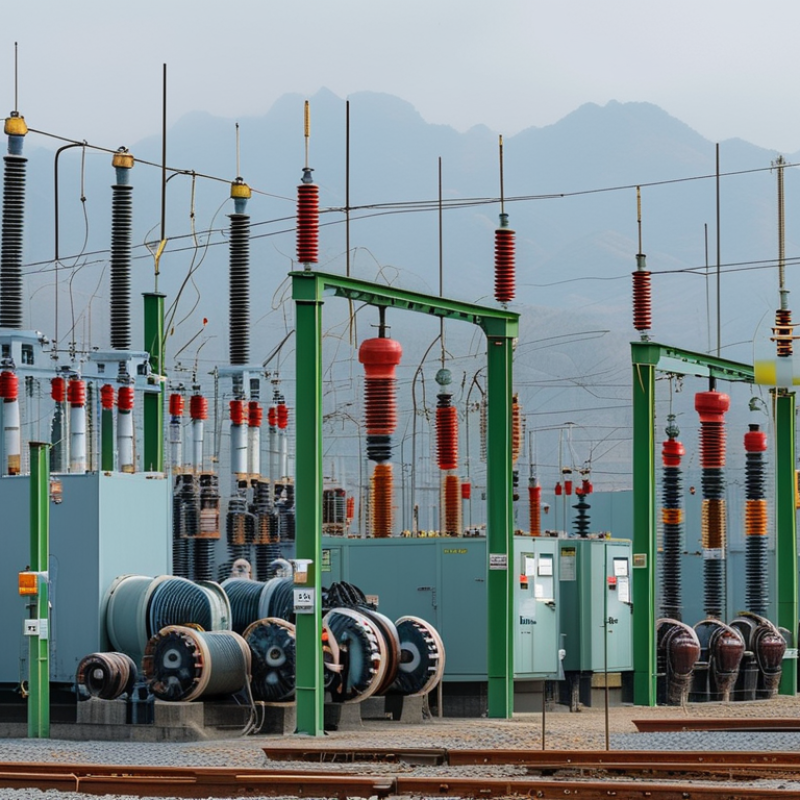
What Is a Voltage Transformer and How Does It Work?
A voltage transformer, also called a potential transformer, reduces high system voltage to a safe, measurable level. Its primary winding connects to the power circuit, while its secondary winding feeds meters, relays, or control equipment. The two windings share a magnetic core but remain electrically isolated. This separation protects technicians and sensitive instruments.
The operating principle is simple: alternating current creates magnetic flux in the core, and that flux induces voltage in the secondary winding. The voltage ratio follows the turns ratio. For example, a 10,000-to-100-volt transformer uses a 100:1 relationship. Accuracy depends on core quality, winding resistance, burden, temperature, and installation. Small errors can become serious during protection trips or energy audits. They are easy to underestimate.
The U.S. Energy Information Administration reports that transmission and distribution losses commonly represent about 5% of delivered electricity. Voltage transformers do not remove these losses, but accurate measurement helps operators locate abnormal loading and poor power quality. The U.S. Department of Energy’s 2024 distribution-transformer analysis estimated 3.6 quadrillion British thermal units in energy savings over 30 years from updated efficiency requirements. That figure concerns distribution transformers, not every instrument transformer. A practical design review should therefore confirm the application, rated burden, insulation level, frequency, and required accuracy class against IEC 61869 or applicable IEEE requirements. Field conditions can be less perfect than the specification sheet.
Key Types of Voltage Transformers Made in China
China’s voltage transformer sector supports expanding transmission, renewable, and industrial networks. The IEA Electricity 2024 report forecasts global electricity demand growth of about 3.3% annually from 2024 to 2026. China remains a major contributor. Its manufacturers produce several key voltage transformer types for different voltage levels and operating conditions.
Inductive voltage transformers are common in medium-voltage switchgear and substations. Dry-type epoxy units suit indoor panels, where fire resistance and compact dimensions matter.
Oil-immersed voltage transformers handle outdoor applications and higher insulation demands. Capacitive voltage transformers serve high-voltage transmission lines, often combining voltage measurement with carrier communication.
Electronic voltage transformers offer lower weight and digital output, although installation teams must verify compatibility with protection systems.
IEC 61869-3 and IEC 61869-5 define important requirements for inductive and capacitive designs.
The China Electricity Council reported approximately 2.92 billion kilowatts of installed power capacity at the end of 2023. That scale increases demand for reliable measurement equipment.
Buyers should examine ratio error, phase displacement, rated burden, insulation level, partial-discharge results, and temperature-rise records. A 110 kV outdoor project may require different testing evidence than a 10 kV factory panel.
The weak point is often not the core. It is incomplete documentation. Some catalogs simplify accuracy classes, and that can mislead procurement teams. Independent test reports and traceable calibration records deserve careful review.
How to Evaluate China’s Voltage Transformer Manufacturers
Evaluating China’s voltage transformer manufacturers requires more than comparing prices. Start with technical fit. Check rated voltage, accuracy class, insulation level, frequency, burden, and operating temperature. Ask for drawings, test procedures, and recent inspection records. A capable supplier should explain each figure clearly, not simply send a catalogue.
Visit the factory when possible. Observe winding equipment, insulation treatment, assembly areas, and final testing. Review how workers control moisture, wire tension, and dimensional accuracy. Request sample units before placing a large order. Independent testing can verify ratio error, phase displacement, dielectric strength, and partial discharge performance. Certificates matter, but traceability matters more. Each unit should connect to materials, operators, and test results.
Look closely at engineering communication. Can the team identify risks in your installation? Do they respond with calculations instead of vague promises? Confirm packaging, delivery terms, warranty coverage, spare parts, and technical support in writing. A low quotation may hide weak testing or inconsistent materials. I have seen attractive samples fail when production volumes increased. That possibility deserves attention. No evaluation is perfect. Recheck critical data, especially when specifications change. A reliable manufacturer accepts reasonable audits, documents limitations, and corrects mistakes without avoiding difficult questions.
Important Standards, Features, and Quality Certifications
Selecting China’s top voltage transformer manufacturers requires more than comparing prices. IEC 61869-1 defines general requirements, while IEC 61869-3 covers inductive voltage transformers. Capacitor voltage transformers follow IEC 61869-5. Buyers should also check applicable Chinese GB standards, rated insulation levels, temperature rise, partial discharge, and accuracy class. A 0.2 or 0.5 accuracy class may suit metering, while protection systems often need different performance during faults.
Look closely at test evidence. Factory acceptance records should show ratio error, phase displacement, insulation tests, and partial discharge results. ISO 9001 supports process control, but it does not replace product testing. Independent type-test reports add stronger evidence. The International Energy Agency reported that more than 80 million kilometres of grids must be added or refurbished globally by 2040. That pressure increases demand for stable, traceable components. It also increases the cost of poor selection. A certificate is not proof of every shipment.
Experienced buyers inspect nameplates, terminal markings, sealing quality, and transport protection. They ask for calibration traceability and routine-test procedures. Small details matter. Oil leakage or unclear wiring can create serious commissioning delays. Some suppliers present impressive documents, yet provide incomplete test conditions. That deserves questions, not automatic trust. Specifications should match the actual substation environment, including altitude, humidity, pollution level, and system frequency. The strongest supplier is not always the cheapest. Reliability must be demonstrated in measurable records.
How to Choose a Reliable Chinese Voltage Transformer Supplier
Choosing a reliable Chinese voltage transformer supplier starts with the application, not the lowest quotation. Define rated voltage, frequency, burden, accuracy class, insulation level, and installation environment. A supplier should ask for these details before proposing a model. That question matters. In field purchasing, vague specifications often create expensive changes later. Request drawings, terminal layouts, dimensions, and material details. Compare each offer line by line, not only by unit price.
Check technical competence through recent test reports, factory photographs, and a live video inspection. Confirm routine tests for ratio, polarity, insulation resistance, and withstand voltage. Ask whether calibrated instruments support the reported results. Reliable factories explain their quality process clearly. They should also provide serial-number traceability from winding materials to final inspection. Request samples when the project allows. A sample may reveal noise, weak labeling, or poor finishing that documents miss.
Review production capacity, delivery controls, packaging, and after-sales response. Clarify who handles design changes, rejected units, and warranty claims. Use a written inspection plan with acceptance criteria before placing an order. Certificates alone are not enough. Their scope and validity must match the product and destination requirements. I once trusted a polished quotation too quickly; missing test details caused delays. That mistake still shapes my supplier checks. Ask for references in similar voltage ranges while protecting confidential project information. Good communication helps, but consistent evidence is stronger.
China Voltage Transformer Supplier Selection: Common Medium-Voltage Classes
Verify that a supplier can manufacture the required primary voltage class and the corresponding highest voltage for equipment. The chart compares common medium-voltage system ratings used for voltage transformer specification.
Reference basis: common nominal system voltage classes aligned with IEC 60038 and equipment voltage levels commonly specified under IEC 62271-1 and corresponding national standards. Ask suppliers for type-test reports, routine-test records, insulation-level confirmation, and traceable calibration documents for the selected voltage class.