China’s prehung door industry has become a practical sourcing option for global buyers. Manufacturers now supply wooden, steel, fiberglass, and fire-rated door assemblies. Their products serve residential projects, hotels, apartments, offices, and commercial developments.
This guide examines ten leading China Prehung Doors manufacturers for international purchasing teams. It focuses on factory experience, product consistency, customization, export capability, and after-sales support. Each company should be assessed beyond attractive catalog photographs. Buyers need to review frame dimensions, hinge locations, swing direction, core materials, finish durability, and weather seals. Small errors can create expensive installation delays. They can also damage a project’s schedule.
Gary Katz, a respected door-installation educator, has stated, “A prehung unit is only as good as its installation.” That practical warning deserves attention. Even a well-built door may perform poorly when the opening is measured incorrectly. This article therefore considers installation drawings, packaging strength, labeling, and technical communication. It also examines lead times, sample approval, container loading, and quality inspection procedures.
The ranking is not a permanent verdict. Factory capacity, materials, and service teams can change. Some manufacturers may excel in custom woodwork, while others perform better with large-volume steel orders. Global buyers should verify current certifications, testing reports, production capacity, and references before signing contracts. A polished showroom is not enough. Reliable evidence matters more.
The following list offers a focused starting point for comparing China’s top Prehung Doors manufacturers. It aims to make sourcing clearer, while acknowledging that every project still requires careful technical judgment.
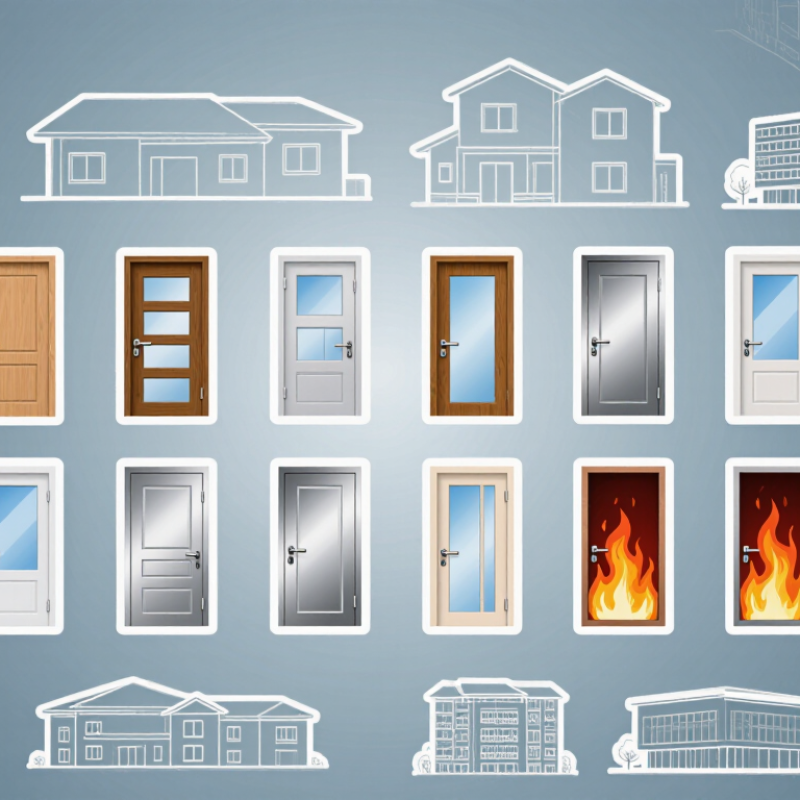
China Top 10 Prehung Doors Manufacturers for Global Buyers
What Prehung Doors Are and Why China Is a Major Manufacturing Hub
A prehung door arrives with the door slab already mounted inside its frame. Hinges, jambs, and often a prepared strike plate come fitted together. Installers can set the complete unit into a rough opening with fewer alignment steps. This saves time on busy residential and commercial projects. It also reduces mistakes caused by measuring each component separately. Still, prehung does not mean installation is effortless. Walls, floors, and opening sizes must remain accurate.
China has become a major manufacturing hub for prehung doors because its supply chain is broad and flexible. Door factories can source panels, timber, veneers, hardware, glass, and packaging from nearby suppliers. Many facilities also support custom sizes, surface finishes, moisture-resistant cores, and bulk production. Large export ports help move containerized orders efficiently. Experienced manufacturers usually combine automated cutting with skilled hand-finishing. That balance matters when buyers need consistent gaps and smooth closing action.
Quality checks should cover frame squareness, hinge alignment, surface defects, moisture content, and packaging strength. Buyers should also request samples before approving a production run. A low quotation can hide weak cores or poor protective wrapping. That lesson is easy to overlook. Specifications should match local building requirements, fire classifications, labeling rules, and installation practices. Factory audits, clear tolerances, and independent inspections can improve reliability. Even experienced sourcing teams sometimes underestimate shipping damage and site conditions. Careful communication remains essential.
China Top 10 Prehung Doors Manufacturers for Global Buyers
How to Evaluate Chinese Prehung Door Manufacturers
A serious evaluation starts with the complete door unit, not the factory website. Ask for frame, slab, hinges, lock preparation, seal, and packaging specifications. The 2023 World Bank Logistics Performance Index ranked China 19th among 139 economies, but strong logistics cannot replace weak product control. Request production photos, inspection records, and traceable batch numbers. Details matter.
Check whether the manufacturer tests complete prehung assemblies for air leakage, water penetration, structural performance, and repeated operation. Relevant buyers may require standards such as ASTM E283, ASTM E331, or NAFS, depending on the market. Ask for recent independent laboratory reports, not only internal certificates. Grand View Research estimated the global doors market would grow at about 4% annually through 2030, increasing supplier competition and quality risks. A polished catalog proves little. Test the sample.
Compare moisture content, dimensional tolerance, hinge alignment, seal compression, and corner protection. For overseas shipments, inspect how pallets prevent frame twisting and edge damage. The World Bank reports that logistics reliability depends on tracking, customs, and delivery consistency, so evaluate all three. I would also check response times during a technical complaint. One weakness in this process is relying too heavily on the first approved sample. Production changes can appear later. Arrange pre-shipment inspection and keep agreed tolerances in writing. Do not guess.
An anonymized comparison framework for international buyers. The figures represent practical procurement benchmarks and should be verified through factory audits, product samples, certification checks, and written quotations before purchase.
| Rank | Supplier Profile | Primary Product Focus | Common Door Materials | Typical Prehung Configurations | Customization Capability | Quality & Compliance Evidence to Request | Typical MOQ | Typical Lead Time | Export Readiness | Evaluation Score |
|---|---|---|---|---|---|---|---|---|---|---|
| 1 | Profile 01 | Architectural exterior and interior door systems | Fiberglass, engineered wood, steel, aluminum | Single, double, sidelite, transom | High | Material test reports, coating data, factory QC records, installation manuals | 50–100 sets | 35–55 days | Strong export packaging and documentation support | 92/100 |
| 2 | Profile 02 | Fire-rated and commercial prehung doors | Galvanized steel, stainless steel, mineral-core panels | Single and double commercial frames | High | Fire-rating reports, smoke-control data, hardware schedules, traceability records | 30–80 sets | 40–60 days | Suitable for project-based international orders | 90/100 |
| 3 | Profile 03 | Wooden doors for residential developments | Solid wood, engineered wood, MDF, veneer | Flush, panel, glazed, double-leaf | High | Moisture-control procedure, formaldehyde testing, finish samples, packing inspection | 100–300 sets | 35–50 days | Good sample approval and container-loading capability | 88/100 |
| 4 | Profile 04 | Energy-efficient exterior entrance doors | Fiberglass, insulated steel, aluminum, composite core | Inswing, outswing, multipoint-lock prehung units | High | Thermal-performance data, air/water test results, weather-seal specifications | 50–150 sets | 40–65 days | Experienced with technical drawings and specification reviews | 87/100 |
| 5 | Profile 05 | Hotel and apartment project doors | Engineered wood, veneer, laminate, steel frames | Bedroom, bathroom, corridor, acoustic configurations | High | Acoustic test data, finish control samples, room-set approval, punch-list process | 100–500 sets | 45–70 days | Effective for large-volume project coordination | 85/100 |
| 6 | Profile 06 | Cost-efficient molded and composite doors | HDF, molded skin, PVC, composite core | Standard single-door prehung sets | Medium–High | Dimensional inspection, surface-finish checks, hinge and latch testing | 200–500 sets | 30–50 days | Competitive for repeat standard orders | 83/100 |
| 7 | Profile 07 | Aluminum and glass entrance systems | Aluminum alloy, tempered glass, laminated glass | Storefront, office, entrance, narrow-stile systems | High | Aluminum finish certificates, glass safety reports, hardware compatibility records | 30–100 sets | 35–60 days | Suitable for commercial and retail fit-out projects | 82/100 |
| 8 | Profile 08 | Acoustic and specialty-purpose doors | Steel, timber, acoustic mineral core, laminated panels | Studio, meeting room, hospitality, utility-room sets | High | Sound-reduction reports, core-density records, seal-performance verification | 20–80 sets | 45–75 days | Strong technical support but longer engineering cycles | 81/100 |
| 9 | Profile 09 | Renovation and replacement door sets | Steel, fiberglass, wood composite, PVC | Replacement frames, adjustable frames, retrofit sets | Medium–High | Opening-size tolerance data, field-measurement templates, replacement-part policy | 50–200 sets | 35–60 days | Flexible for distributors and remodeling contractors | 79/100 |
| 10 | Profile 10 | Private-label and distributor-focused doors | Steel, fiberglass, molded wood, laminate | Standard prehung sets with private-label packaging | Medium | Pre-shipment inspection, barcode control, carton-drop testing, spare-parts list | 100–300 sets | 30–55 days | Good for importers seeking standardized SKUs | 77/100 |
China’s leading prehung door manufacturers serve different project needs rather than one identical market. The first profile focuses on engineered timber doors for hotels and apartments. The second supplies steel security doors with reinforced frames. The third specializes in fire-rated assemblies, tested through accredited laboratories. The fourth produces moisture-resistant doors for coastal developments. The fifth supports residential builders with standardized sizes and stable production batches.
The remaining profiles show useful manufacturing depth. One factory combines doors, frames, and certified hardware under one order. Another offers acoustic systems for offices and hospitality spaces. A seventh manufacturer develops minimalist flush doors for high-volume interiors. The eighth focuses on customized finishes, including woodgrain films and painted surfaces. The ninth handles aluminum-framed systems for modern commercial buildings. The tenth serves distributors with private-label packaging, inspection records, and container planning. Details matter here.
Grand View Research values the global doors market at tens of billions of US dollars, with renovation and construction sustaining demand. Mordor Intelligence also identifies Asia-Pacific as a major growth region. These reports support China’s relevance, but they do not prove every supplier’s quality.
Buyers should verify fire ratings, moisture performance, hinge alignment, and packing strength through samples. A polished catalog can still hide weak edge sealing. I would request recent test reports, factory videos, and an independent pre-shipment inspection before approving a large order. Mistakes often begin with assumptions.
China Top 10 Prehung Doors Manufacturers for Global Buyers
China’s leading prehung door manufacturers now serve residential, hospitality, and commercial projects worldwide. Buyers should compare complete assemblies, not door slabs alone. Common products include interior wood doors, fire-rated steel doors, acoustic doors, and exterior fiberglass systems. Materials often include engineered timber, MDF, steel, aluminum, glass, and mineral cores. According to Grand View Research, the global doors market is projected to grow steadily through 2030, supported by construction and renovation demand. That growth increases supplier competition, but also makes technical verification essential.
Tips: Request a sample assembly. Check the frame, hinges, seals, lock preparation, and packaging together. Confirm moisture content for timber components. A perfect door with a weak frame is still a poor shipment.
Certifications can separate reliable factories from attractive catalogs. ISO 9001 supports process control, while FSC documentation may support responsible wood sourcing. Fire and acoustic claims need test reports from recognized laboratories. CE marking may apply to selected construction products, depending on the destination and product category. Export-capable manufacturers should provide English specifications, pallet details, installation drawings, and consistent container loading records. The International Trade Centre highlights the importance of product compliance and customs documentation in cross-border trade. Still, documents are not proof of every production batch. Independent inspection before shipment remains sensible, even when the factory appears experienced. Some suppliers may communicate quickly but explain tolerances poorly. That is a warning worth considering.
When comparing China’s leading prehung door manufacturers, global buyers should look beyond catalog photos and headline prices. Request the same specification from every supplier: door size, wall thickness, swing direction, jamb material, core type, finish, hardware, and packaging. Small differences can change the final cost.
Use a comparison sheet. Record factory experience, production capacity, quality controls, export history, and response time. Ask for recent product photos, inspection records, test reports, and sample approval procedures. Documents matter. A polished quotation proves little without traceable evidence. Consider a video factory tour or an independent pre-shipment inspection. It may feel unnecessary for a small order, but replacement costs are usually higher.
Ask each supplier to quote using identical trade terms and shipment destinations. Confirm lead time, minimum order quantity, spare parts, warranty handling, and payment milestones in writing. Before production, approve a signed specification sheet and one physical sample. Check hinge alignment, latch operation, surface consistency, and carton strength. Do not rely only on verbal promises.
Mistakes happen.
A low price may hide weaker packaging or unfinished details. I would also leave time for corrections, because international projects rarely follow the first schedule. Place the order only after confirming drawings, labels, dimensions, inspection points, and shipping documents. Keep every revision attached to the purchase contract.
Watch video