China’s greenhouse manufacturing sector has become a practical sourcing base for growers, distributors, and protected-cultivation contractors worldwide. Greenhouse Pipe is central to this supply chain. It supports arches, columns, purlins, bracing, ventilation frames, and crop-support systems.
Market estimates differ. Grand View Research valued the global greenhouse market at approximately USD 31 billion in 2023 and expects continued growth through 2030. MarketsandMarkets also reports strong expansion in controlled-environment agriculture, driven by water efficiency, climate volatility, and year-round production. These figures describe the wider greenhouse industry, not pipes alone. That distinction matters.
Small details decide performance.
A pipe with uneven galvanizing may rust around cut edges. A thin wall may deform during a heavy snow event. Poorly aligned holes can slow installation across thousands of square meters. Buyers should review steel grade, outside diameter, wall thickness, zinc coating, weld quality, dimensional tolerance, load calculations, and inspection records. ISO 1461, ASTM, and EN references can support clearer comparisons, but certificates still require verification.
Merle Jensen, a respected greenhouse technology specialist, described the principle clearly: “The greenhouse is a tool for controlling the environment, not a substitute for good crop management.” His observation applies to structural sourcing too. Even the strongest pipe cannot correct weak engineering or careless installation.
This guide examines China’s top ten Greenhouse Pipe manufacturers for global buyers. It considers production capacity, customization, export experience, testing, coating quality, and after-sales communication. Rankings are never perfect. Factory data can change, and online claims may be incomplete. Independent samples and inspections remain sensible before large orders.
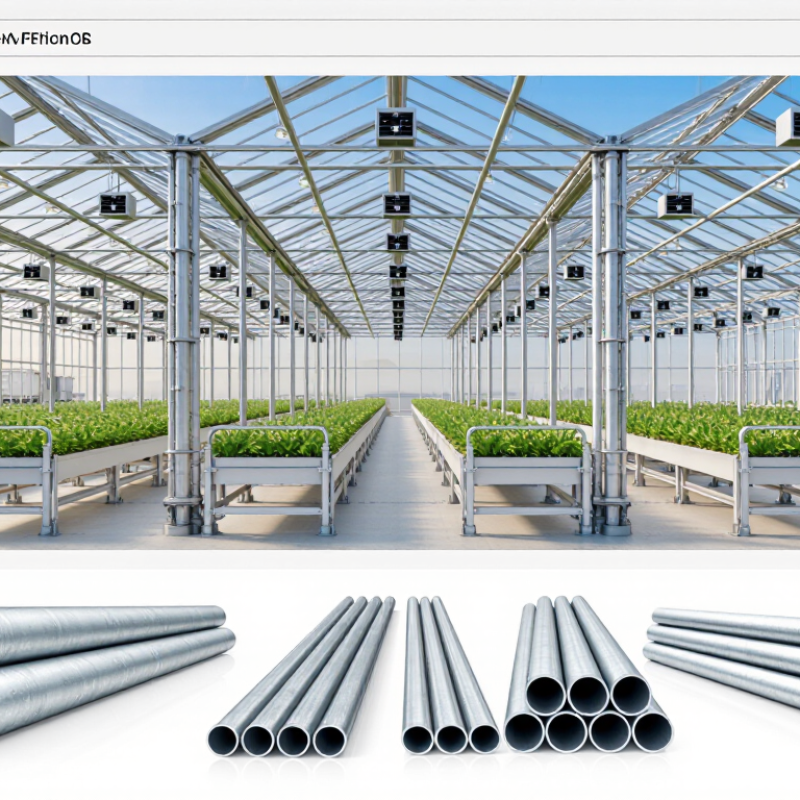
China’s greenhouse pipe manufacturing industry is tied closely to the country’s expanding protected agriculture sector. The Ministry of Agriculture and Rural Affairs has reported more than 40 million mu of facility agriculture, equal to roughly 2.67 million hectares. Definitions vary, though. This figure may include tunnels, glasshouses, and other structures, so buyers should compare data carefully.
China also offers a deep steel supply base. World Steel Association data shows China produced about 1.005 billion tonnes of crude steel in 2024. That scale supports consistent access to welded steel tubes, galvanized coils, and forming equipment. In practical inspections, pipe quality depends on more than appearance. Buyers should verify outside diameter, wall thickness, zinc coating, weld continuity, and dimensional tolerance. A clean surface can still hide weak galvanizing.
For greenhouse frames, manufacturers commonly produce round, rectangular, and oval pipes. Hot-dip galvanized surfaces usually suit humid environments better than untreated steel. However, coating performance depends on steel preparation, zinc mass, cutting, and storage. Standards such as EN 10346 and ASTM A653 can support clearer purchasing specifications. Load tests should reflect local wind, snow, span, and crop conditions. Not every factory publishes these results. That is a weakness worth questioning. Independent inspection, sample testing, and traceable mill certificates provide stronger evidence than catalog claims. Suppliers serving overseas buyers should also document packing methods, corrosion protection, and tolerance control during mass production.
Key Criteria for Selecting Reliable Greenhouse Pipe Manufacturers
Global buyers should evaluate greenhouse pipe manufacturers through evidence, not polished catalog images. Ask for steel grade, zinc coating thickness, outside diameter, wall thickness, and dimensional tolerances. Reliable factories provide traceable material certificates and clear inspection records. These documents should match the actual batch shipped to your project.
Production experience matters when pipes face humidity, fertilizer residue, wind, and repeated assembly. Examine tube-forming equipment, welding quality, galvanizing control, and cut-end protection. Request samples with realistic lengths, joints, and connectors. A simple load test can reveal bending, loose welds, or poor fit. Check whether the factory performs salt-spray or corrosion testing under recognized procedures. Results need dates and test conditions.
Communication is another practical test. The manufacturer should explain minimum order quantities, packaging methods, replacement policies, and export documents without vague promises. Confirm production capacity during peak seasons. Contact previous business references when possible. A very low quotation may hide thinner walls, weaker coating, or inconsistent tolerances. That mistake becomes expensive after installation. No supplier is perfect. I would still question any company that avoids factory audits, video inspections, or independent testing. Clear drawings, signed specifications, and pre-shipment inspection reduce misunderstandings for buyers comparing China’s greenhouse pipe suppliers.
This illustrative buyer scorecard assigns practical evaluation weights to the factors most commonly reviewed during international greenhouse pipe sourcing. The percentages are procurement guidelines rather than company ratings or market-share data.
For global buyers, the top 10 Chinese greenhouse pipe manufacturers should be judged by production evidence, not attractive catalog images. Strong suppliers usually offer galvanized steel pipes, aluminum profiles, and coated components for tunnels, Venlo houses, and climate-controlled structures. Their factories should control pipe diameter, wall thickness, welding quality, and surface protection. Small differences matter.
Ask each manufacturer for recent inspection reports, material certificates, coating thickness records, and dimensional tolerances. A reliable supplier can explain whether the pipe uses hot-dip galvanizing, pre-galvanized steel, or powder coating. These processes perform differently in humid farms and coastal regions. Request samples before placing a large order. Check the thread, cut edge, connector fit, and packing strength.
The top ten suppliers may provide custom lengths, drilling, bending, and bundled packaging for container shipment. However, customization can increase waste and lead time. No factory is perfect. A low quotation may hide thinner steel, weaker welds, or inconsistent coatings. Buyers should compare total service value, including replacement procedures and technical communication. English drawings help, but they do not replace physical testing. Factory audits also deserve attention. Review equipment maintenance, batch tracking, worker inspection records, and export experience. A supplier that answers difficult questions clearly is often safer than one that only promises fast delivery.
For global buyers comparing China’s top ten greenhouse pipe manufacturers, product range matters more than catalog size. Reliable suppliers usually provide round, oval, rectangular, and threaded pipes for frames, benches, irrigation, and ventilation systems. Common materials include galvanized steel, aluminum alloy, and PVC-coated steel. Hot-dip galvanizing is preferable for humid sites because zinc protects exposed steel surfaces. However, coating thickness must be verified, not simply promised.
According to the FAO, agriculture uses about 70% of global freshwater withdrawals. This pressure increases demand for protected cultivation and efficient greenhouse systems.
Buyers should examine pipe diameter, wall thickness, yield strength, and corrosion resistance together. EN 13031-1 supports greenhouse structural design, while ISO 9001 can indicate controlled production processes. ISO 14001 may also reflect better environmental management. These certificates are useful, but they do not replace independent inspection.
Production capability separates serious exporters from trading companies. Look for automated tube mills, laser cutting, calibrated welding, hot-dip galvanizing, load testing, and batch traceability. A 2024 MarketsandMarkets report projects continued double-digit growth in smart greenhouse technology, increasing demand for compatible structural components.
Packaging also deserves attention; thin separators and moisture protection can prevent damage during long sea transport. A low price can still be a warning. My practical concern is simple: some suppliers publish excellent samples, yet provide weaker production batches. Random third-party testing remains necessary.
China Top 10 Greenhouse Pipe Manufacturers for Global Buyers
Evaluating Chinese greenhouse pipe suppliers requires more than comparing catalog prices. Ask for steel grade, outer diameter tolerance, wall thickness, zinc coating, weld inspection, and load-test records. Relevant standards may include ASTM A500, EN 10219, and ISO 1461, depending on the destination market. Samples matter. Request three production samples, then verify dimensions with a digital caliper and coating thickness gauge. In my experience, small deviations can complicate connector assembly and increase installation labor.
Pricing should be compared on a landed-cost basis, not only per metric ton. Include cutting, threading, packaging, inland transport, ocean freight, insurance, duties, and replacement rates. Use recent steel benchmarks from the World Bank Commodity Markets data series, but treat them as reference points, not final quotes. A supplier offering an unusually low price may have reduced wall thickness or incomplete galvanizing. That possibility deserves testing, not assumptions.
Export capability also needs evidence. The World Bank’s 2023 Logistics Performance Index evaluates 139 economies across customs, infrastructure, shipments, and delivery reliability. Ask suppliers for packing photographs, container-loading plans, export documents, and recent on-time delivery records. Check HS-code consistency through UN Comtrade data where possible. Sustainability should enter the assessment too. FAO’s 2023 report estimated global agrifood hidden costs above 12 trillion dollars, reminding buyers to examine durability, corrosion life, and replacement waste. No spreadsheet replaces a factory visit. That remains an uncomfortable gap.
Anonymous supplier benchmark profiles for comparing greenhouse pipe production, specifications, commercial terms, quality systems, and export capabilities.
| Benchmark Profile | Major Manufacturing Region | Core Greenhouse Pipe Products | Common Material & Finish | Typical Outside Diameter | Typical Wall Thickness | Applicable Standards | Indicative Annual Capacity | Typical MOQ | Indicative FOB Price | Typical Lead Time | Quality & Inspection Capability | Export Service Coverage | Evaluation Score |
|---|---|---|---|---|---|---|---|---|---|---|---|---|---|
| Profile 01 | Tianjin / North China | Structural tubes Roll-up pipes Cross connectors | Low-carbon welded steel; pre-galvanized and hot-dip galvanized options | 19–114 mm | 0.8–3.5 mm | EN 10346, ASTM A653/A653M, ISO 1461 where applicable | 20,000–40,000 metric tons/year | 1 × 20-foot container | USD 780–1,080/metric ton | 25–40 days | Mill certificates, coating checks, dimensional inspection, third-party inspection accepted | Commercial invoice, packing list, certificate of origin, loading photos, container booking support | 88/100 |
| Profile 02 | Hebei / North China | Greenhouse columns Purlins Film-lock pipes | Galvanized carbon steel; zinc coating commonly specified at 40–275 g/m² | 20–100 mm | 0.9–3.0 mm | ASTM A500, EN 10219, customer drawings | 15,000–30,000 metric tons/year | 10 metric tons or mixed container order | USD 760–1,050/metric ton | 20–35 days | Tensile testing, weld inspection, zinc-weight verification, random sampling | FCL consolidation, multilingual sales support, export packaging, basic installation drawings | 86/100 |
| Profile 03 | Jiangsu / East China | Multi-span frames Ventilation pipes Support tubes | High-strength welded steel; hot-dip galvanized or powder-coated surface options | 25–140 mm | 1.0–4.0 mm | EN 10219, ISO 9001 production procedures, project specifications | 25,000–50,000 metric tons/year | 1–2 containers | USD 820–1,160/metric ton | 30–50 days | Dimensional reports, coating-thickness records, welding procedure control, pre-shipment inspection | Engineering drawings, palletized export packing, container optimization, customs-document support | 91/100 |
| Profile 04 | Shandong / East China | Single-span structures Tomato trellis pipes Greenhouse accessories | Pre-galvanized steel strip; optional zinc-aluminum-magnesium coated steel | 16–89 mm | 0.7–2.5 mm | ASTM A653/A653M, EN 10346, buyer-specific specifications | 12,000–25,000 metric tons/year | 5 metric tons | USD 790–1,100/metric ton | 20–40 days | Coil traceability, surface inspection, diameter and wall-thickness checks | Small-order consolidation, barcode labeling, export cartons, destination-port coordination | 84/100 |
| Profile 05 | Zhejiang / East China | Hydroponic supports A-frame pipes Custom cut-to-length tubes | Cold-formed carbon steel; galvanized, painted, or plastic-coated finish | 19–76 mm | 0.8–2.8 mm | ASTM A500, EN 10219, ISO 9001 quality procedures | 8,000–18,000 metric tons/year | 3 metric tons or one mixed container | USD 850–1,220/metric ton | 25–45 days | Cut-length tolerance control, coating inspection, sample approval before mass production | Low-volume customization, CAD drawing review, neutral packaging, courier sample service | 87/100 |
| Profile 06 | Guangdong / South China | Commercial greenhouse tubes Curtain-system pipes Light structural members | Welded galvanized steel; corrosion-resistant coatings for humid environments | 20–108 mm | 0.9–3.2 mm | EN 10346, ASTM A500, project-specific engineering standards | 10,000–22,000 metric tons/year | 1 × 20-foot container | USD 830–1,180/metric ton | 30–45 days | Weld continuity checks, coating measurement, dimensional inspection, loading supervision | South-East Asia routing, export documentation, moisture-resistant packing, spare-parts support | 85/100 |
| Profile 07 | Liaoning / Northeast China | Cold-climate frames Heavy-duty columns Wind-resistant supports | Structural carbon steel; hot-dip galvanized after fabrication when required | 32–159 mm | 1.5–5.0 mm | ASTM A500, EN 10219, GB/T 6725, engineered load calculations | 18,000–35,000 metric tons/year | 20 metric tons | USD 810–1,140/metric ton | 35–55 days | Load-related dimensional control, weld testing, galvanizing records, inspection plans | Project-based packing lists, structural marking, installation manuals, container loading reports | 89/100 |
| Profile 08 | Fujian / Southeast China | Vegetable greenhouse pipes Roll-up assemblies Plastic-film accessories | Pre-galvanized welded steel; zinc coating typically selected for medium exposure conditions | 19–60 mm | 0.7–2.2 mm | EN 10346, ASTM A653/A653M, buyer drawings | 6,000–15,000 metric tons/year | 2 metric tons or one mixed container | USD 820–1,190/metric ton | 20–35 days | Incoming material inspection, diameter checks, coating appearance inspection | Mixed-SKU loading, private-label-free packaging, export declarations, destination-port delivery coordination | 82/100 |
| Profile 09 | Hubei / Central China | Large-span greenhouse tubes Irrigation supports Custom structural sections | High-strength low-alloy steel; galvanized or corrosion-protection coating specified by project | 25–168 mm | 1.2–4.5 mm | EN 10219, ASTM A500, ISO 1461 for hot-dip galvanizing | 14,000–28,000 metric tons/year | 10 metric tons | USD 840–1,250/metric ton | 30–50 days | Material traceability, mechanical testing, coating-thickness reports, third-party audit support | Technical quotation, drawing confirmation, export crating, certificate and inspection-document packages | 90/100 |
| Profile 10 | Anhui / East-Central China | Standard greenhouse frames Nursery structures Galvanized pipe fittings | Low-carbon welded steel; pre-galvanized finish with optional post-fabrication galvanizing | 20–102 mm | 0.8–3.0 mm | ASTM A500, EN 10219, GB/T 3094, customer specifications | 9,000–20,000 metric tons/year | 5–10 metric tons | USD 775–1,090/metric ton | 25–40 days | Dimensional inspection, weld appearance checks, packing inspection, sample retention | Container consolidation, export packaging, certificate preparation, basic after-sales replacement support | 83/100 |
Watch video