China’s titanium industry includes producers, processors, and exporters serving demanding industrial markets. This guide introduces ten Chinese manufacturers associated with Gr5 Titanium Tube, a product valued for its strength-to-weight ratio and corrosion resistance. Grade 5 is the familiar Ti-6Al-4V alloy, but a material name alone does not establish tube quality. Details matter.
For engineers and purchasing teams, useful comparisons begin with the intended service conditions. Wall thickness, outside diameter, length, heat-treatment condition, and manufacturing route can all affect suitability. Aerospace, chemical-processing, marine, and medical applications may require different documentation and qualification checks. Ask suppliers for current material certificates, dimensional tolerances, inspection records, and traceability information. Where relevant, confirm applicable standards against the project specification. A polished website is not proof of consistent production.
The manufacturers in this overview should be assessed by capability, not just headline claims or export reach. Check whether each company makes seamless or welded tubing, controls critical processes, and can support sample evaluation. Lead times, minimum order quantities, and communication quality matter in real procurement, too. Claims need checking. Some details may be difficult to compare publicly, and rankings can change as product ranges and available evidence change. Use this list as a research starting point, then verify technical claims with suppliers and an independent inspection plan before placing an order. This approach helps buyers narrow options without treating a directory entry as an endorsement.
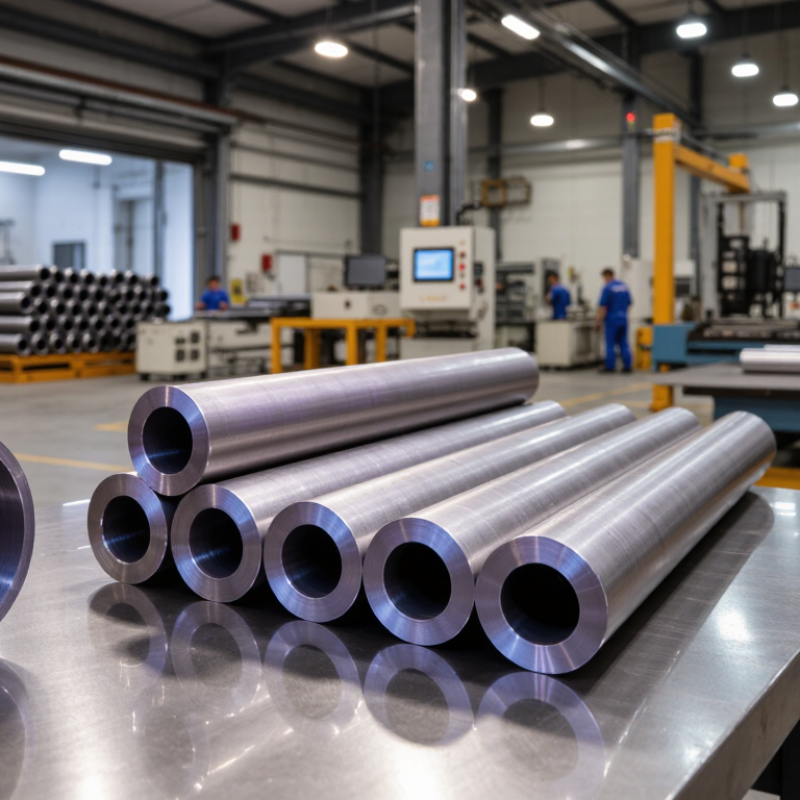
Grade 5 titanium, also called Ti-6Al-4V, contains aluminum and vanadium. It is a strong, lightweight alloy used where ordinary metals may add too much weight or corrode too quickly. In tube form, it can carry loads while resisting many corrosive environments. You may see it in aerospace structures, chemical equipment, and marine components. It is not a universal solution. Compared with commercially pure titanium, Grade 5 can be harder to form and weld, so fabrication details matter.
Tips: Check the tube’s outside diameter, wall thickness, and required condition. Ask for material test certificates and confirm that inspection records match the supplied batch. Small differences matter.
A useful tube specification should reflect the actual service conditions, including temperature, pressure, and exposure to chemicals. Grade 5 can be heat treated, but the selected process affects its properties. Welding also needs controlled procedures and suitable surface preparation; contamination can undermine joint quality. For buyers comparing manufacturers in China, request traceable test data and discuss dimensional tolerances before production. A polished sample may look convincing, yet it cannot prove consistent wall thickness. That detail is easy to overlook, and I would not treat it as minor.
Grade 5 titanium tubes are made from Ti-6Al-4V alloy, containing about 6% aluminum and 4% vanadium. Producers typically melt and remelt the alloy under vacuum, then form billets into hollow sections by extrusion or rolling. Cold pilgering or drawing brings the tube closer to its final diameter and wall thickness. Annealing restores ductility; pickling removes surface scale. The route varies with tube size and application.
Testing checks whether the tube meets both material and dimensional requirements. For heat-exchanger tubing, ASTM B338 specifies Grade 5 minimum tensile strength of 895 MPa and yield strength of 828 MPa, with 10% minimum elongation. These figures are specification thresholds, not guarantees for every finished tube. Inspectors also measure wall thickness, ovality, and straightness, then use methods such as eddy-current or ultrasonic examination to detect flaws. ASTM E213 provides guidance for ultrasonic testing of metal tubing. Small flaws matter. A practical weakness is that inspection can miss defects if probe settings or calibration are poor, so test records and traceable samples deserve close review.
Chinese titanium tube suppliers differ widely in capability. Some melt and roll titanium; others mainly cut or resell finished stock. Ask who controls melting, tube forming, heat treatment, and final inspection. Request heat-number traceability linking each tube to its chemical and mechanical test results. Paperwork matters.
The USGS Mineral Commodity Summaries 2025 estimates global titanium-mineral-concentrate production at roughly 9 million metric tons in 2024. This is an upstream figure, not tube output or Grade 5 capacity. Buyers should not treat national production volume as proof of a factory’s ability to meet a specific order. For Ti-6Al-4V tube, check the purchase specification against the applicable ASTM requirements, such as ASTM B338 where relevant. Confirm dimensions, tensile properties, chemistry, and inspection methods in writing.
Look closely at sample records, not just a polished brochure. Ask for recent test reports, heat-treatment details, and the inspection plan for the actual production lot. Verify wall thickness at several points; thin-wall tube can vary along its length. For welded material, ask how weld quality is examined. A factory visit or independent inspection can help, though neither guarantees every batch. I would also confirm whether a quoted delivery date includes testing and packing. Buyers sometimes overlook that delay.
China’s Top 10 Grade 5 Titanium Tube Manufacturers are best compared by production evidence, not promotional claims. Grade 5, also called Ti-6Al-4V, combines strength with relatively low weight. Buyers should check whether a supplier can provide the required tube dimensions, heat-treatment condition, and material test report. Small differences in wall thickness can affect machining and fit.
Ask how tubes are inspected. Useful records may include chemical analysis, tensile results, dimensional checks, and nondestructive testing where specified. For example, confirm outside diameter and wall thickness at several points, not just one location. Also clarify whether the tubes are seamless or welded; the correct option depends on the design and service conditions. A polished sample is not enough evidence. A neat ranking can still mislead, since capabilities vary by product size and production lot.
Tips: Request a recent inspection report for the exact grade and size you plan to order. Compare lead time, tolerances, packaging, and traceability in writing. If a claim is unclear, ask for the test method and acceptance criteria. I would not treat a low price as proof of poor quality, either; compare like-for-like specifications before deciding.
Grade 5 Titanium (Ti-6Al-4V): Minimum Mechanical Property Benchmarks
These representative minimum values are commonly specified for Grade 5 Ti-6Al-4V in the annealed condition. Minimum elongation is commonly specified as 10%. Actual tube requirements vary by product standard, dimensions, and condition; confirm the applicable specification when comparing suppliers.
When comparing China-based Grade 5 titanium tube manufacturers, start with the application, not the catalogue. Grade 5, or Ti-6Al-4V, can suit demanding strength and weight requirements, but tube performance depends on dimensions, processing, and inspection. A thin-wall tube for a hydraulic line needs different checks from a larger tube used in chemical equipment. Be specific.
Ask each supplier for the proposed manufacturing route, dimensional tolerances, heat-treatment details, and material test documentation. Check whether test records identify the actual production batch, rather than showing only a generic sample. For critical service, clarify available non-destructive testing and agree on acceptance criteria before ordering. A certificate alone is not enough.
Compare samples against the real drawing. Measure outside diameter, wall thickness, straightness, and surface condition; small variations can complicate fit-up. Also ask how the manufacturer handles revisions, rejected batches, and lead-time changes. For marine or corrosive environments, confirm that the proposed alloy and finish match the exposure conditions. For medical or aerospace uses, verify the exact qualification and traceability requirements with the responsible engineering team; a supplier’s general capability statement may not cover them. It is easy to overvalue a low quote. I would still check the inspection plan twice.
| No. | Comparison Dimension | Relevant Fact or Requirement | Application Considerations | Evidence to Request from Each Manufacturer |
|---|---|---|---|---|
| 1 | Grade identification | Grade 5 titanium is Ti-6Al-4V, commonly identified by UNS number R56400. | Confirm that the offered material is Grade 5, rather than commercially pure titanium or another titanium alloy. | Material test certificate showing grade, chemistry, product form, heat number, and applicable specification. |
| 2 | Product specification | ASTM B338 covers seamless and welded titanium and titanium-alloy tubes for condensers and heat exchangers. ASTM B861 covers seamless titanium and titanium-alloy pipe; ASTM B862 covers welded pipe. | For tube purchases, specify the applicable tube standard and confirm that the requested product form and end use fall within its scope. | Quotation and certificate identifying the exact standard, grade, edition, and any agreed supplementary requirements. |
| 3 | Tube manufacturing route | Tube may be supplied as seamless or welded; the selected route should meet the purchase specification and application requirements. | Heat-exchanger, pressure, and critical-service projects may have different process and inspection requirements. Do not assume one route is suitable for every design. | Written confirmation of manufacturing route, process controls, and any required weld inspection or qualification records. |
| 4 | Dimensions and tolerances | Outside diameter, wall thickness, length, and dimensional tolerances must be stated in the purchase order and checked against the governing standard. | Thin-wall heat-exchanger tubes and precision assemblies can be especially sensitive to wall-thickness variation, ovality, and straightness. | Dimension-by-dimension tolerance schedule and a sample inspection report for the ordered size. |
| 5 | Mechanical properties | Required mechanical-property limits depend on the specified standard, product form, dimensions, and condition; use the current applicable specification rather than an unsourced generic value. | Match strength, ductility, and condition requirements to design loads, forming, joining, and service temperature. | Mill test certificate reporting the required tensile-test results and the condition in which the tube was supplied. |
| 6 | Chemical composition | Grade 5 chemistry is controlled by the applicable material specification; certificate values should be traceable to the relevant heat. | Composition verification is important when material substitution, mixed heats, or critical-service qualification is a concern. | Heat-specific chemical analysis on the material test certificate, with a documented method for resolving discrepancies. |
| 7 | Inspection and testing | Inspection and test requirements should be agreed under the governing product standard and purchase contract. Nondestructive testing methods are not interchangeable in every application. | Define any required dimensional checks, pressure or leak tests, and nondestructive examination before placing the order. | Inspection and test plan identifying test methods, acceptance criteria, sampling frequency, and reports supplied with the shipment. |
| 8 | Traceability and documentation | Heat and lot traceability links supplied tubes to their material certificates and inspection records. | Projects with quality-system, regulatory, or maintenance requirements may need traceability maintained through cutting and delivery. | Sample certificate package, marking plan, traceability procedure, and confirmation of document-retention practices. |
| 9 | Corrosion-service suitability | Titanium alloys are used in many corrosive environments, but suitability depends on the specific medium, concentration, temperature, flow, and crevice conditions. | For seawater, chemical processing, or heat-exchanger service, assess the full operating conditions; do not treat “corrosion resistant” as a universal service guarantee. | Application-specific technical review, relevant service references, and written confirmation of any stated limitations or assumptions. |
| 10 | Application and delivery fit | Tube requirements differ among heat exchangers, chemical-process equipment, aerospace components, and other engineered products. | Compare each supplier against the actual drawing, specification, required quantity, delivery schedule, packaging, and destination requirements. | Technical compliance statement, deviations list, production lead time, packaging details, and shipment documentation requirements. |
Watch video