China Top 10 Mother Roll Reel Manufacturers?

China’s Mother Roll Reel sector supports packaging, printing, hygiene, and industrial converting worldwide. Its importance is easy to miss. A single parent reel can determine production speed, waste levels, and final product consistency.

Smithers’ The Future of Global Flexible Packaging to 2028 identifies Asia as a major growth center for flexible packaging demand. Grand View Research also reports continuing expansion in paper and packaging applications across China. These trends create stronger demand for stable reel quality, accurate winding, and dependable export service. However, market growth alone does not prove manufacturing capability.

This guide examines ten leading Chinese manufacturers of Mother Roll Reel products. The assessment considers substrate range, reel width, basis weight, moisture control, edge trimming, splice performance, and customization. It also reviews factory experience, testing procedures, certifications, production capacity, and customer support. Real purchasing experience often reveals small details. A clean reel edge matters when a slitter runs continuously at high speed. Uneven tension can create telescoping, wrinkles, or costly downtime.

The ranking should not be treated as permanent. Public information changes, and some manufacturers present limited technical data. That is worth questioning. Buyers should verify test reports, sample reels, lead times, and references before signing contracts. Reports from Smithers, Grand View Research, and IMARC provide useful market context, but they do not replace factory audits. A reliable supplier must prove performance under actual converting conditions. That is where brochures become less persuasive.
China Top 10 Mother Roll Reel Manufacturers?

What Is a Mother Roll Reel and How Is It Used?

China Top 10 Mother Roll Reel Manufacturers?

What Is a Mother Roll Reel and How Is It Used?

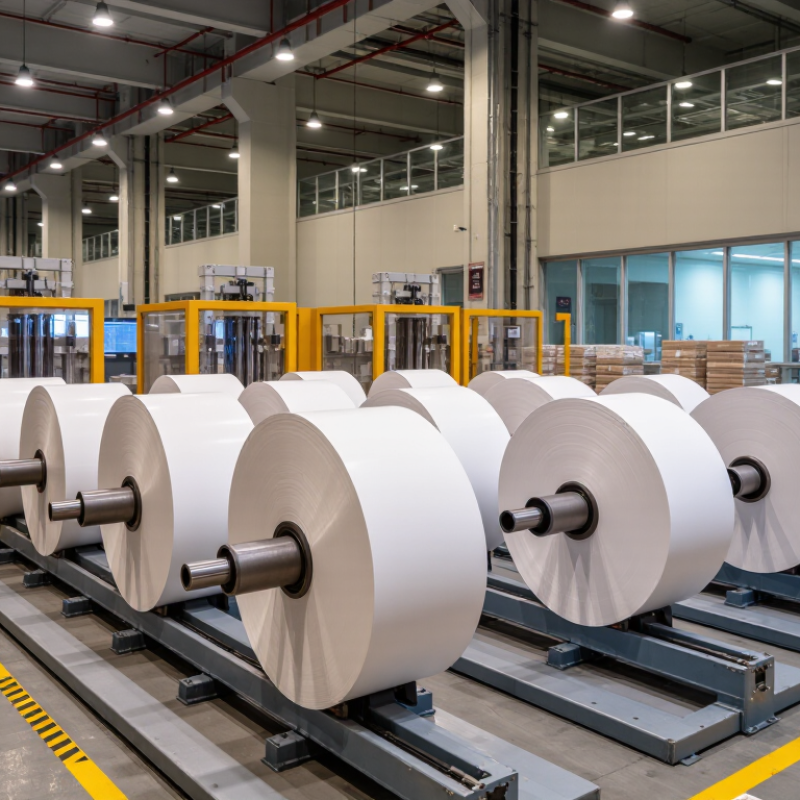
A mother roll reel is a large, continuous roll of paper, film, foil, or nonwoven material. It comes directly from a paper machine or film production line. Converters then place it on an unwinding stand. Slitting knives divide the wide roll into narrower reels. These reels feed printing, laminating, bag-making, or tissue-converting equipment.

The scale is substantial. FAO’s Forestry Production and Trade database recorded approximately 416 million tonnes of global paper and paperboard production in 2022. CEPI’s Preliminary Statistics 2023 reported about 79.5 million tonnes of paper and board production in Europe. These volumes explain why reel handling requires controlled braking, accurate shaft alignment, and stable web tension. A typical handling process includes lifting, shaft insertion, edge protection, storage, unwinding, and rewinding. One small alignment error can create telescoping edges or wrinkles.

In practical purchasing, buyers should inspect load capacity, reel diameter, core size, floor space, and automation level. Safety chucks and hydraulic lifting systems reduce manual handling risks. Tension control also protects delicate substrates during acceleration. However, “mother roll reel” is used loosely in some supplier documents. It may describe the roll itself, the reel stand, or the complete handling system. That wording deserves verification. A machine can look impressive, yet perform poorly with uneven moisture or soft cores. Production trials remain necessary, even when the technical sheet appears complete.

How to Evaluate China’s Mother Roll Reel Manufacturers

Evaluating China’s mother roll reel manufacturers requires more than comparing prices. A 2024 Smithers industry forecast expects the global flexible packaging market to exceed US$300 billion by 2029. That growth increases demand for stable, high-speed reel equipment. Ask each supplier for measurable data, including maximum roll width, loading capacity, winding speed, tension accuracy, and rejected-roll rates. A polished showroom can still hide weak production control.

Request a factory video and an on-site trial using your actual paper, film, or foil. Check shaft alignment, web wrinkles, edge telescoping, braking response, and noise levels. Review at least twelve months of service records. Confirm whether critical parts are locally available in China. ISO 9001 certification is useful, but it does not prove machine performance. The supplier should provide drawings, electrical lists, preventive-maintenance schedules, and test results. Some manufacturers present impressive speed figures without stating the material thickness. That omission deserves attention.

Tips: Compare total operating cost, not only the quotation. Measure power use, scrap, labor needs, spare parts, and response time. The 2023 PMMI Packaging Machinery Economic Report links automation investment with productivity improvements, but actual gains depend on operator training and process stability. Run a seven-day acceptance test when possible. Record roll diameter, tension variation, downtime, and surface defects. Also speak with two existing customers. One reference is not enough. A careful evaluation may feel slower, yet hurried purchasing can create years of avoidable maintenance work.

Profiles of China’s Top 10 Mother Roll Reel Manufacturers

Profiles of China’s Top 10 Mother Roll Reel Manufacturers

China’s leading mother roll reel manufacturers serve flexible packaging, labels, household paper, and industrial films. A practical top-ten profile should consider machine width, winding stability, slitting accuracy, coating control, and export support. Smithers estimates the global flexible packaging market could exceed US$300 billion by 2028. This growth increases demand for cleaner reels and tighter tolerances.

The top profiles usually include film reel specialists, paper reel producers, foil converters, coated-material suppliers, and multi-substrate manufacturers. Several factories operate lines wider than 3 meters, with automated tension control and inline inspection. Experienced buyers should request test reels, core specifications, roll hardness records, and gauge variation data. ISO 9001 systems help, but certificates alone prove little. Production discipline matters more. I have seen attractive samples fail during high-speed unwinding. That gap deserves attention.

Tips: Compare actual trial results, not catalog claims. Check splice quality, edge damage, moisture data, and storage conditions. Ask for batch traceability and a corrective-action report. A useful supplier should explain limitations clearly. That honesty is often more valuable than a perfect sales presentation. According to the World Packaging Organisation’s industry guidance, recyclability and material reduction remain major packaging priorities. Therefore, the best manufacturer may not offer the cheapest reel. It may offer stable performance with less waste.

Comparison of Products, Technology, Capacity, and Services

China Top 10 Mother Roll Reel Manufacturers?

Comparing China’s leading mother roll reel manufacturers requires more than checking catalogue photos. Product range matters first. Some suppliers produce reels for paper, plastic film, aluminum foil, and nonwoven materials. Others focus on heavy industrial rolls. Check maximum width, roll diameter, core size, surface finish, and permitted weight. A reel that handles 2,000 kilograms may not suit delicate film. Small details matter.

Technology separates experienced factories from simple fabricators. Look for balanced rotating parts, automatic tension control, edge correction, and real-time thickness monitoring. Servo systems can reduce winding errors, but only when properly calibrated. Ask for factory test records, material certificates, dimensional reports, and sample-run videos. I would not trust polished images alone. They show appearance, not performance.

Capacity also needs careful comparison. Review monthly output, machining equipment, welding standards, inspection staff, and production lead times. A large workshop may still outsource critical components. That creates uncertainty. Service should include engineering drawings, installation guidance, operator training, spare parts, and response times. Remote support is useful, but on-site assistance may be necessary for complex reel systems. Request references from similar industries and compare actual delivery records. My assessment would remain imperfect without visiting the facility, checking finished reels, and observing a full-load test. Some suppliers communicate quickly before payment, then respond slowly during commissioning. That risk deserves attention.

How to Select the Right Chinese Manufacturer for Your Needs

Selecting the right Chinese mother roll reel manufacturer requires more than comparing quotations. Check whether the factory has experience with your material, width, GSM, core size, and monthly volume. Ask for recent production records, inspection reports, and clear tolerance ranges. A capable supplier should explain how it controls moisture, edge damage, winding tension, and roll hardness.

Request a video audit or visit the facility when possible. Look at raw material storage, slitting equipment, packing areas, and finished-roll identification. Ask for a small trial order before signing a large contract. Measure basis weight, tensile strength, moisture, roll diameter, and splice quality after delivery. Keep written specifications. Verbal promises are easy to misunderstand.

Communication matters as much as machinery. Confirm lead time, loading plans, replacement procedures, payment stages, and export documents in writing. Ask how quickly technical questions receive answers. I once focused too heavily on price and overlooked inconsistent roll labeling. That mistake created extra warehouse work. My checklist is not perfect, either. Recheck supplier claims against samples, references, and independent inspection where practical. Choose a manufacturer that admits production limits and proposes workable adjustments, rather than one that promises everything. Small details often decide whether a mother roll performs smoothly on your converting line.

China Top 10 Mother Roll Reel Manufacturers? - How to Select the Right Chinese Manufacturer for Your Needs

Rank Selection Dimension What to Verify Practical Benchmark Recommended Evidence
1 Product Specification Capability Confirm whether the factory can produce the required substrate, thickness, width, core size, coating, and reel diameter. The supplier should provide a written specification sheet covering tolerances, core dimensions, roll length, and applicable grades. Technical datasheet, approved sample, and signed product specification.
2 Raw Material Traceability Check how base paper, film, foil, adhesive, ink, and coating materials are approved and recorded. Each production batch should be linked to incoming-material records and a finished-goods lot number. Material certificates, batch records, and lot-tracking procedure.
3 Production Capacity Evaluate available converting, slitting, rewinding, printing, laminating, and packing capacity for recurring orders. Capacity should be demonstrated using current equipment lists, monthly output records, and realistic lead-time commitments. Factory audit, machine list, production schedule, and capacity statement.
4 Quality Management System Review inspection procedures for incoming materials, in-process production, finished reels, and nonconforming products. A documented quality system should define inspection frequency, acceptance limits, corrective action, and record retention. Quality manual, inspection checklist, calibration records, and corrective-action reports.
5 Dimensional and Visual Consistency Verify web width, thickness, winding tension, roll hardness, edge quality, splice control, surface defects, and telescoping. Acceptance limits must be agreed before production and measured with calibrated instruments. Pre-production sample, inspection report, photos, and measurement data.
6 Testing and Compliance Identify tests relevant to the application, including tensile strength, moisture, adhesion, coefficient of friction, migration, or barrier performance. Test methods should match the intended end use and the destination-market regulations. Third-party laboratory reports, declarations of conformity, and test-method references.
7 Lead Time and Order Flexibility Compare sampling time, standard production lead time, minimum order quantity, rush-order policy, and changeover flexibility. Lead times should be quoted by product type and confirmed in a purchase agreement rather than stated generally. Formal quotation, production plan, delivery history, and service-level terms.
8 Packaging and Export Logistics Check moisture protection, pallet strength, edge protection, labeling, container loading, and documentation capability. Packaging should protect reels from deformation, contamination, and humidity during international transport. Packaging specification, loading photographs, shipping documents, and carton or pallet markings.
9 Total Cost of Ownership Compare material price, tooling, setup fees, packaging, freight, duties, waste rate, inspection costs, and payment terms. The lowest quoted unit price should not be selected without reviewing yield, defect risk, logistics, and after-sales costs. Itemized quotation, landed-cost model, payment terms, and warranty conditions.
10 Communication and After-Sales Support Assess technical communication, response speed, complaint handling, replacement policy, and support for future specification changes. Responsibilities, response times, inspection procedures, and claim-resolution steps should be written into the contract. Communication log, service agreement, complaint procedure, and warranty terms.
Selection note: Use the same specification, sample requirements, testing method, and commercial terms when comparing manufacturers. Anonymous evaluation criteria are shown here to support objective supplier selection without ranking or promoting individual companies or brands.

Smart Robotics brand movie

Watch video