Choosing reliable Tube Benders in 2026 requires more than comparing catalog prices. Global buyers face different materials, production volumes, voltage requirements, and service expectations. A machine that performs well in a small workshop may struggle on an automated factory line. Wall thickness matters. So does bend radius.
This guide examines ten tube benders selected for practical international purchasing decisions. The evaluation considers bending accuracy, frame strength, tooling flexibility, control systems, maintenance access, and operator safety. It also reviews manual, hydraulic, electric, and CNC models for different working environments. Real-world details matter, such as whether a machine can handle stainless steel without visible flattening or repeated angle errors.
Experience suggests that supplier support often determines long-term value. Spare tooling, clear manuals, training, and responsive technical service can prevent expensive downtime. Buyers should verify certifications, warranty terms, shipping arrangements, and local electrical compatibility before placing an order. These points are easy to overlook.
Performance is not everything.
The featured products are not ranked as universal winners. Their suitability depends on tube size, alloy, bend complexity, and expected output. Some specifications may appear impressive but require closer verification with test samples. That is an important limitation. Product data can change, and supplier claims should be checked against documented testing or independent feedback.
With a practical, evidence-based approach, this overview helps engineers, distributors, and workshop owners compare options more confidently. The goal is not to promote the most expensive equipment. It is to identify dependable machines for specific production needs.
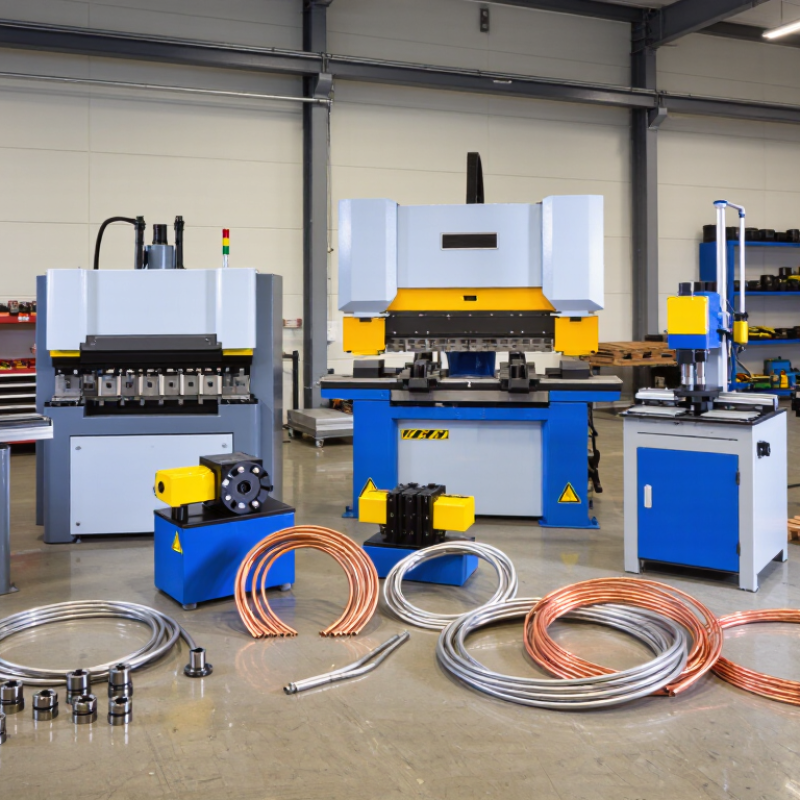
A tube bender reshapes round, square, or rectangular tubing without cutting it. The machine applies controlled force around a die. The tube follows the die’s radius and keeps its selected angle. Common systems use rotary-draw, roll, compression, or press bending. Rotary-draw machines usually provide better repeatability for tight, visible bends.
The process depends on several contact points. A clamp die holds the tube. A pressure die supports its outside wall. A wiper die can reduce wrinkles near the bend. For thin-wall tubing, a mandrel supports the inside surface. Without support, the tube may flatten, buckle, or show excessive thinning. ASTM A513 and ISO 8491 testing principles help engineers evaluate tube dimensions, bending behavior, and surface quality. Grand View Research’s 2024 metal forming machine tools analysis identified automation and repeatable forming as major market drivers. Research and Markets also projects continued growth in tube and pipe processing equipment through this decade. These reports suggest demand, not guaranteed performance.
Tips: Match the die radius to the tube diameter and wall thickness. Check springback after each trial bend. A digital angle readout helps, but it is not magic. Measure the finished part with a radius gauge and caliper. Lubrication also matters, especially with stainless steel. I have seen operators blame the machine when the real problem was inconsistent material hardness. That assumption deserves review. Select equipment with overload protection, documented accuracy, and service support in your region.
For global buyers, the best tube bender is not simply the fastest machine. It must match tube diameter, wall thickness, material strength, and bend radius. The World Steel Association’s October 2024 Short Range Outlook projected global steel demand growth of 1.2% in 2025. This suggests continued demand for dependable forming equipment. Buyers should compare maximum outside diameter, minimum centerline radius, mandrel support, and repeatability. A machine rated for 80 mm tubing may perform poorly with thin-wall stainless steel. Capacity charts need careful reading.
Automation also deserves attention. The International Federation of Robotics reported 541,302 industrial robot installations worldwide in 2023. This trend supports demand for CNC control, automatic loading, recipe storage, and production data tracking. Yet more axes do not automatically mean better results. A simpler machine may offer easier maintenance and faster operator training. Check positioning accuracy, setup time, electrical compatibility, guarding, and emergency-stop compliance. Ask for sample bends using your actual tube grade. Marketing tolerances can look impressive, but real bends may reveal springback, wrinkles, or surface marks.
Tips: Request a written test report before purchase. Compare cycle time, scrap rate, and tool-change minutes. Confirm spare-part availability in your region. Review manuals in a language your technicians understand. Also inspect the software interface. A powerful controller becomes a burden when operators cannot edit recipes confidently. ISO 12100 risk-assessment documentation and clear maintenance schedules add practical value. Do not ignore shipping dimensions, voltage, training, or remote service response time. These details often decide whether a machine earns its place on the factory floor.
Choosing among the 10 best tube benders for global buyers in 2026 requires more than comparing prices. Start with tube diameter, wall thickness, material, and required bend radius. A machine designed for thin copper may struggle with stainless steel tubing. Check these limits carefully.
Manual benders suit repair teams and low-volume projects. Electric models improve repeatability and reduce operator fatigue. CNC systems offer precise production, but they require trained setup staff and reliable maintenance support.
Look for programmable bend angles, durable tooling, emergency stops, and clear operating instructions. Small details matter. A poorly fitted die can leave marks or flatten the tube.
Global buyers should also confirm power requirements, spare-part availability, packaging quality, and technical support. A machine may perform well in testing but fail during installation if the voltage is unsuitable. Ask for sample bends before purchasing.
Measure the angle, ovality, surface marks, and springback. I have found that supplier claims sometimes sound stronger than the actual results. This deserves careful checking. Independent inspection can also reveal loose fixtures, weak welds, or inaccurate displays. The best tube bender is not always the fastest or cheapest. It should match your materials, production volume, workers’ skills, and long-term service needs.
Choosing a tube bender starts with the tube, not the machine. Confirm the material, outside diameter, wall thickness, and required bend radius. Steel, stainless steel, aluminum, and copper behave differently under pressure. A machine that handles thin aluminum may struggle with heavy-wall steel. Check its published capacity carefully. Some specifications describe maximum size, not reliable production performance.
Bend accuracy also matters. Ask about repeatability, angle control, tooling changes, and operator setup time. For vehicle frames, handrails, and process piping, small angle errors can create costly fitting problems.
Electric models suit repeat production, while manual or hydraulic units may fit repair work and smaller workshops. Consider voltage, plug configuration, spare tooling, training, and service access in your region. My first equipment shortlist was too focused on price. That mistake ignored downtime.
Measure your most demanding tube first. Request sample bends before purchasing. Inspect the inside radius for wrinkles and flattening. Compare actual cycle times, not attractive claims. Keep a written record of successful settings. It saves time later.
For global buyers, confirm documentation, safety instructions, and compatible electrical requirements. Check whether dies are included or sold separately. A compact bender may appear efficient, yet limited tooling can restrict future projects. Noise, floor space, portability, and maintenance access deserve attention too. Ask how quickly worn parts can arrive. A perfect bend is less useful when the machine sits idle. Overlooking this detail remains an easy purchasing error.
For the 10 best tube benders for global buyers in 2026, safety should outweigh purchase price.
OSHA estimates that hazardous-energy incidents cause about 50,000 injuries and 120 deaths annually in the United States. A safer machine needs guarded pinch points, a reachable emergency stop, clear isolation procedures, and stable work support. Check whether controls support your operators’ languages. Guard the pinch point. ISO 12100 risk-assessment principles can guide this review, but local requirements still need verification.
Maintenance affects production more than many brochures admit.
The U.S. Department of Energy’s Operations & Maintenance Best Practices Guide reports that predictive maintenance can reduce maintenance costs by 25–30% and downtime by 35–45%. Ask for lubrication intervals, calibration procedures, electrical diagrams, and spare-part availability before ordering. Inspect rollers, dies, hydraulic lines, and cables on a fixed schedule. Keep records. A missed inspection can erase the savings from an inexpensive machine.
International purchasing requires practical questions.
Confirm metric and imperial tooling, input voltage, frequency, plug configuration, crating, customs documents, and remote support. Request test-bend samples using your actual tube grade and wall thickness. Verify repeatability, minimum bend radius, maximum capacity, and training coverage. A low price may conceal expensive dies or long freight delays. I would also question impressive accuracy claims without independent test conditions; measurement methods are often unclear. The 2024 Deloitte Global Chief Procurement Officer Survey identifies supply-chain resilience as a major procurement priority, supporting the value of local service capability and critical spare parts.
Watch video