10 Best Shuttle Carts for Warehouses in 2026?

Warehouse space is expensive, and every extra pallet position can change daily operations. A Shuttle Cart can move loads through deep-lane storage, reduce repeated forklift travel, and support more consistent replenishment. But the right choice depends on the building, not just the brochure.

MHI’s 2024 Annual Industry Report found that 55% of surveyed supply-chain professionals planned to increase investment in supply-chain technology and innovation. That figure signals growing interest, not proof that automation suits every warehouse. A narrow aisle, uneven floor, or awkward pallet size can turn a promising system into a costly mismatch. Small details matter.

This guide compares 10 shuttle carts for warehouses in 2026, with attention to load capacity, operating conditions, controls, safety features, maintenance, and integration needs. Published performance figures should be treated carefully: throughput varies with layout, traffic, staffing, and the way a system is used. A vendor’s peak rate is not a guaranteed daily result. Fit comes first.

Before choosing, measure aisle widths, pallet dimensions, clear heights, and actual movement patterns. Ask suppliers how they calculate capacity and what support they provide after installation. Then compare total ownership costs, including batteries, service, training, and downtime. No model wins everywhere. Some facilities may be better served by a simpler setup, even if it looks less advanced. That is an imperfect trade-off, but a useful one to make before committing.
10 Best Shuttle Carts for Warehouses in 2026?

Define warehouse shuttle carts and their role in pallet handling

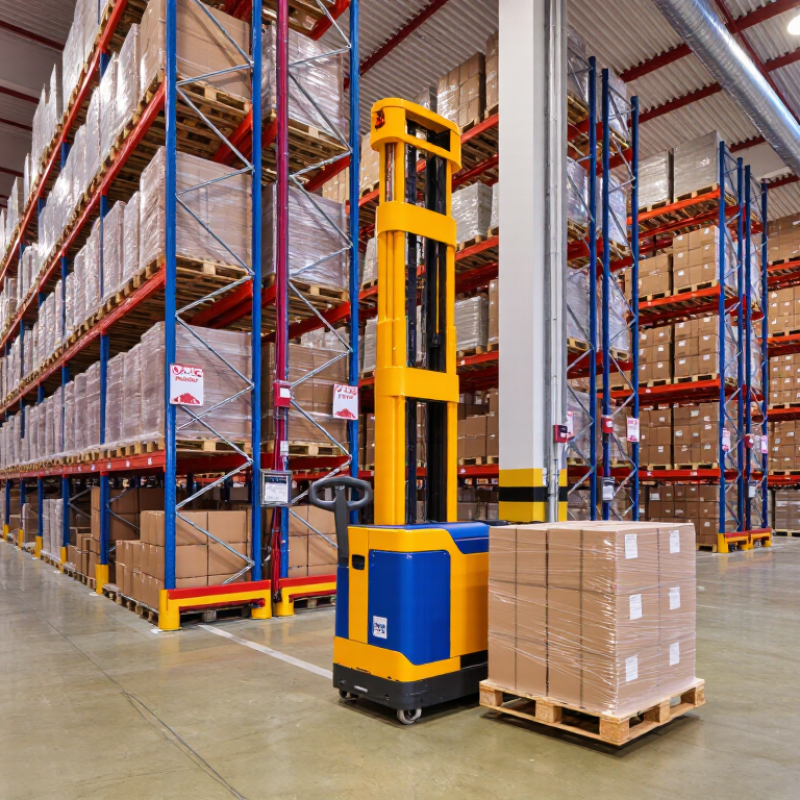
Warehouse shuttle carts are powered carriers that move pallets along rails inside deep-storage rack lanes. A forklift places a pallet at the lane entrance; the cart carries it to an open position and returns for another load. In retrieval, it brings the selected pallet back to the aisle. This reduces forklift travel inside the rack and supports high-density storage. Depending on the system, lanes can operate on a last-in, first-out or first-in, first-out basis.

The benefit depends on good lane planning. Pallets must fit the clearances, and similar products should be grouped to avoid awkward replenishment. Shuttle carts can reduce repeated truck movements, but they do not fix poor inventory data or uneven pallet quality. Small gaps matter. MHI’s 2024 Annual Industry Report found that 55% of surveyed supply-chain professionals planned to increase technology investment in 2024. That signals interest in automation, not proof that every warehouse needs a shuttle system.

Tips: Check pallet dimensions, load weights, and daily turnover before choosing lane depth. Test retrieval routines with real operators. A missed exception can still slow the aisle. Review charging, inspection, and recovery procedures too; these details are easy to underestimate.

Set selection criteria around load capacity, throughput, controls, and safety

A useful shuttle-cart shortlist starts with the real load, not the largest number on a product sheet. Record the heaviest tote or pallet, attachments, and load position; then compare that figure with the cart’s rated capacity. Leave room for uneven loads and repeated starts. Small details matter.

Throughput needs the same practical check: measure trips per hour, travel distance, handoff delays, and queue time at busy aisles. A fast cart can still create a bottleneck if operators wait for loading or clearance.

Controls should match the work. Compare manual, remote, and automated options by training time, visibility, and how easily operators can stop or recover a cart. Test it loaded. Check braking, emergency-stop access, warning signals, aisle visibility, and compatibility with the floor and traffic routes.

MHI and Deloitte’s 2024 Annual Industry Report found that 55% of surveyed organizations planned to increase supply-chain technology and innovation investment. That broader trend supports evaluating controls carefully; it does not prove that automation suits every warehouse.

Ask suppliers for documented capacity and cycle-test results, then run a site trial during a representative shift. One limitation: a short trial may miss peak-season congestion. Recheck assumptions with operators before choosing.

Check pallet compatibility against ISO 6780’s six principal pallet dimensions

A shuttle cart should match the pallet footprint, not just its advertised load capacity. ISO 6780 lists six principal flat-pallet dimensions: 1200 × 1000 mm, 1200 × 800 mm, 1219 × 1016 mm, 1140 × 1140 mm, 1100 × 1100 mm, and 1067 × 1067 mm. Before selecting a cart, measure the actual pallets in circulation. A nominal 1200 × 1000 mm pallet may have damaged edges, uneven boards, or a load that overhangs the deck. Small mismatches matter. Check support points, entry clearance, and whether the cart can carry the pallet without obstructing sensors or rails.

ISO dimensions are a starting point, not a guarantee of fit. Pallet openings, bottom-board patterns, and load distribution can vary, even within one size class. Measure both the pallet and its heaviest typical load, then confirm the cart’s usable deck dimensions and rated capacity. MHI’s 2024 Annual Industry Report found that 55% of surveyed organizations planned to increase supply-chain technology investment. That investment is easier to justify when equipment works with existing pallets. Still, a few test runs may reveal awkward cases that drawings miss. Test each pallet type under load, at the shuttle’s actual transfer points, before finalizing the fleet.

10 Best Shuttle Cart Configurations for Warehouses in 2026 — Check Pallet Compatibility Against ISO 6780’s Six Principal Pallet Dimensions

This is a brand-neutral selection guide, not a ranking of specific commercial products. The pallet footprints below are the six principal dimensions identified by ISO 6780; actual compatibility depends on the pallet, load, shuttle, and rack design.

No. Shuttle Cart Configuration ISO 6780 Pallet Footprint Potential Warehouse Fit Compatibility Checks Before Selection Operational Considerations
1 General-purpose, single-deep lane profile 1200 × 1000 mm Warehouses handling common industrial pallet loads with a consistent footprint. Confirm the pallet’s actual outside dimensions, entry direction, bottom-deck or runner layout, and loaded overhang against the cart and lane. Suitable where the selected rack layout and stock rotation method match the required access pattern.
2 High-density, multi-pallet lane profile 1200 × 1000 mm Storage of multiple pallets per lane where reducing aisle access is a priority. Check the deepest pallet position, total loaded mass, pallet condition, lane alignment, and the shuttle’s rated capacity for the intended duty. Plan replenishment and retrieval sequences; deep-lane storage can limit direct access to individual pallets.
3 Euro-footprint distribution profile 1200 × 800 mm Distribution and manufacturing operations using the 1200 × 800 mm pallet format. Verify the cart’s support arrangement matches the pallet’s underside and that the pallet is loaded in the intended orientation. Do not assume a cart set up for a wider pallet will safely support this footprint without checking contact points and clearances.
4 North American 48 × 40 in profile 1219 × 1016 mm Facilities using the common 48 × 40 inch pallet footprint. Check actual pallet tolerances and convert all rack, cart, and clearance measurements consistently; nominal inch dimensions may be rounded in specifications. Allow for load overhang, pallet variation, and the operating clearance required by the rack and shuttle system.
5 Square-footprint profile 1140 × 1140 mm Operations whose inbound or internal pallet pool uses this square format. Confirm both orientations are supported if pallets may enter the lane turned 90 degrees; check runner placement and load stability. A square footprint does not by itself guarantee that the pallet can be transferred or supported in either orientation.
6 Industrial square-pallet profile 1100 × 1100 mm Sites standardized on 1100 mm square pallets for storage and material handling. Measure the usable support width and verify the pallet’s underside, edge condition, and loaded dimensions against the equipment specification. Use representative pallets during commissioning, including pallets at the limits of the site’s accepted condition.
7 42 × 42 in square-pallet profile 1067 × 1067 mm Warehouses handling the 42 × 42 inch nominal square pallet format. Confirm dimensions in millimetres or inches across the full equipment layout and check that the cart’s supports engage the actual pallet construction. Check compatibility with the complete load unit, not only the empty pallet footprint.
8 Mixed-pallet operation profile 1200 × 800 mm and 1200 × 1000 mm Sites that need to store both common European-format footprints. Use only a cart and lane arrangement specifically designed and approved for both footprints; verify clearances and support positions for each pallet type. Segregated lanes or clearly controlled pallet orientation can reduce misplacement and compatibility errors.
9 Mixed regional pallet-pool profile 1219 × 1016 mm and 1067 × 1067 mm Facilities receiving different North American pallet formats. Confirm each format independently, including entry direction, underside support, loaded overhang, and shuttle capacity. Identify pallet type at receiving and route it to a compatible lane; do not treat similar nominal sizes as interchangeable.
10 Square-pallet family profile 1140 × 1140 mm and 1100 × 1100 mm Operations managing more than one square pallet format in the same facility. Verify the cart-and-rack design for each exact footprint; a 40 mm difference in nominal side length can affect lane clearance and support engagement. Use separate, labeled lane groups unless the system supplier confirms the design accommodates both sizes.

Selection note: ISO 6780 specifies nominal pallet dimensions, not shuttle-cart compatibility or load capacity. Before purchase, verify the complete pallet-and-load envelope, pallet entry direction and underside design, rack clearances, rated dynamic load, operating conditions, and the equipment supplier’s written compatibility approval.

Compare the 10 best warehouse shuttle carts for 2026 by rated specifications

A useful 2026 comparison of ten warehouse shuttle carts starts with rated payload, deck size, and wheel configuration—not appearance. Match each cart’s stated capacity to the heaviest routine load, then check whether the deck holds totes without overhang. Compare four-wheel platforms for stable, straight runs; swivel-wheel models turn more easily in tight aisles. Two-shelf carts improve access to small parts, while cage-sided designs help contain loose items. Long-load frames suit pipes or trim, but need clear turning space. Small details matter.

Record the manufacturer-rated load, deck dimensions, handle height, wheel material, and braking method for all ten finalists. A load rating alone does not show how smoothly a cart moves over dock plates or floor joints. MHI’s 2024 Annual Industry Report found that 55% of surveyed supply chain professionals planned to increase technology and innovation investment. That is useful context, not proof that any cart will improve productivity. Test shortlisted carts with the actual load and route. A short aisle trial can expose poor steering or awkward braking. Ratings still need real-world checks.

A fair comparison should flag missing or inconsistent specifications rather than assume equal performance. Note the empty-cart weight, warranty terms, and replacement-wheel availability, too. Small print counts. A high-capacity cart may be harder to maneuver when fully loaded, and a compact deck may force extra trips. Those trade-offs are easy to overlook.

Assess site safety in light of OSHA’s estimate of 85 annual forklift deaths

OSHA estimates that forklift incidents cause about 85 worker deaths each year. That figure makes warehouse traffic more than a productivity concern. A cart review should start with people: where operators walk, where loads turn, and where sightlines disappear. A blind corner can matter more than a cart’s rated capacity.

Shuttle carts may help move goods along planned routes, reducing some trips made by forklifts. They do not remove risk by themselves. Check aisle width, floor condition, load stability, stopping distance, and visibility before choosing equipment. Mark crossings clearly. Separate pedestrian paths where practical, and use mirrors or warning signals where views are blocked. Keep speeds suitable for the space.

Watch a normal shift, not just a quiet tour. Note where pallets narrow an aisle or workers step around parked equipment. Ask operators what feels awkward; they often know, though they may not report every near miss. That gap matters. Compare cart capacity and maneuverability with actual loads, then train staff on routes, charging, and parking. Recheck after layout changes. Even a well-chosen cart can become a hazard when rushed, overloaded, or left in a walkway. Safety is never finished.

Article Source:

Smart Robotics brand movie

Watch video