10 Best Paper Food Box Machines for Global Buyers
Global food-service packaging is changing at the same time that buyers are demanding dependable output, clean forming, and less material waste. Smithers’ report, The Future of Packaging: Long-Term Strategic Forecasts to 2030, forecasts the global packaging market will reach about US$1.14 trillion by 2030. That figure covers packaging broadly, not paper food boxes alone. Still, it signals the scale of investment behind production decisions.
“Packaging is the science, art, and technology of enclosing or protecting products for distribution, storage, sale, and use,” writes packaging specialist Walter Soroka in Fundamentals of Packaging Technology. For a Paper Food Box Machine, that principle becomes tangible: a blank sheet feeds into the forming section, corners fold, and pressure helps create a box that must hold its shape around a hot meal. Small differences in board weight, tooling, speed, and operator skill can affect the result.
The 10 machines in this guide are considered through practical buyer criteria, including forming quality, changeover time, capacity, maintenance access, and supplier support. Specifications deserve careful checking. A quoted output rate may not match a buyer’s actual box size or material. And a fast machine is not automatically the best fit. These comparisons are a starting point, not a substitute for sample runs, reference checks, and a close review of operating costs.
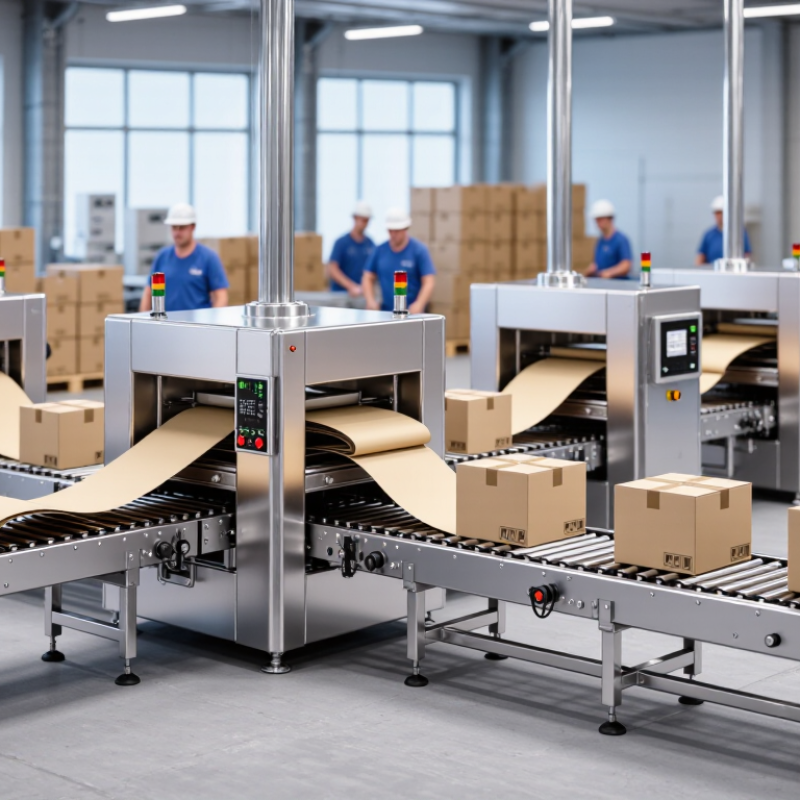
Table of Contents [Hide]
Paper Food Box Machine Types: Folding, Forming, and Printing Systems
Paper food box machines generally combine three systems: folding, forming, and printing. Folding machines crease and close pre-cut blanks, making them suitable for cartons with straight panels and tuck-in flaps. Forming machines shape flat stock around a mold, then seal or lock the corners. Printing systems add logos, instructions, or batch details before conversion. Each process has different tolerances. A tiny change in board thickness can shift a fold or weaken a seal.
Eurostat’s 2022 packaging-waste statistics show that more than 80% of paper and cardboard packaging was recycled in the EU. That figure makes recyclable material an important design consideration, but it does not mean every recycled board runs smoothly on every machine. Ask suppliers to test your actual stock, including coatings and moisture levels. Check changeover time, forming speed, print registration, and reject rates. Fit matters. A fast machine that struggles with your chosen board may waste more than it saves.
Tips: Bring sample blanks and printed sheets to a machine trial. Inspect the finished box under real filling conditions, not just on a display table. One weak corner can undo an otherwise clean fold.
| No. | Machine Type | Main Production Stage | Typical Material | Indicative Output | Best Suited For | Key Buyer Considerations |
|---|---|---|---|---|---|---|
| 1 | Automatic Paper Box Forming Machine | Forms and bonds pre-cut box blanks | Coated or uncoated paperboard; commonly about 200–400 gsm, depending on the box design | About 30–80 boxes per minute, depending on size and construction | Takeaway cartons, lunch boxes, and standard food packaging | Check blank dimensions, forming method, glue compatibility, changeover time, and finished-box stack quality. |
| 2 | Paper Lunch Box Folding and Gluing Machine | Folds and glues die-cut lunch-box blanks | Food-packaging paperboard, typically selected to suit the box size and required stiffness | About 30–100 boxes per minute for common configurations | Clamshell-style meal boxes and folding takeaway cartons | Confirm whether the machine handles the required locking tabs, corner styles, and glue pattern. |
| 3 | Paper Bowl and Tray Forming Machine | Forms and seals shaped blanks into bowls or trays | Formable food-grade paperboard, often with a barrier coating appropriate to the food | About 30–80 pieces per minute; output varies with shape and forming stations | Salad bowls, snack trays, and shallow food containers | Evaluate forming depth, rim finish, leak resistance, coating compatibility, and tooling cost. |
| 4 | Paper Cup and Round-Container Forming Machine | Curls, joins, and forms round paper containers | Coated cupstock or other approved liquid-resistant paperboard | About 40–120 pieces per minute, depending on diameter and machine configuration | Round soup, dessert, and side-dish containers | Check bottom-seal quality, rim curling, container dimensions, and suitability for hot or cold contents. |
| 5 | Sheet-Fed Flexographic Printing Machine | Prints graphics on paperboard sheets before converting | Paperboard sheets compatible with the selected ink and coating system | Typically several thousand sheets per hour; actual output depends on sheet size, colors, and setup | Short-to-medium runs and jobs requiring flexible print configurations | Review color capability, registration accuracy, ink drying, food-packaging compliance, and make-ready waste. |
| 6 | Sheet-Fed Offset Printing Machine | Prints detailed artwork on flat carton stock | Printable paperboard, commonly supplied as flat sheets | Typically thousands of sheets per hour; speed varies by press format and job conditions | High-quality graphics and larger production runs | Consider print quality, plate and setup costs, coating options, color control, and downstream food-contact requirements. |
| 7 | Digital Paperboard Printing Machine | Prints short-run or variable designs without conventional printing plates | Paperboard qualified for the specific digital ink or toner system | Job-dependent; generally selected for flexible, shorter runs rather than maximum volume | Samples, prototypes, seasonal designs, and multiple small-batch orders | Check board compatibility, print durability, cost per sheet, color consistency, and required finishing steps. |
| 8 | Flatbed Die-Cutting and Creasing Machine | Cuts and creases printed or plain sheets into box blanks | Paperboard within the machine’s approved sheet and thickness range | Often several thousand sheets per hour, depending on format, tooling, and operator cycle | Complex carton shapes, prototypes, and varied box designs | Verify cutting accuracy, crease quality, sheet format, stripping options, and access to dies and service. |
| 9 | Rotary Die-Cutting Machine | Continuously cuts and creases material from a roll or in-line web | Paper or paperboard supplied in a compatible roll format | Web speed is line- and design-dependent; compare finished pieces per minute for the target blank | Long, repeat orders with consistent designs and roll-fed production | Assess roll handling, registration, tooling, waste removal, and integration with printing or forming equipment. |
| 10 | Folder-Gluer Machine | Folds and bonds die-cut carton blanks into finished boxes | Creased paperboard blanks compatible with the folding and adhesive system | About 50–200 boxes per minute on suitable designs; complex cartons may run slower | Folding cartons and takeaway boxes with straight-line or multi-panel designs | Match the machine to box style, blank dimensions, adhesive type, inspection needs, and required operator skill. |
Note: Output figures are indicative ranges for comparison, not guaranteed machine specifications. Actual production depends on box dimensions, material, coating, tooling, operator skill, and machine configuration. Buyers should request a production trial using their own approved food-packaging materials and box designs.
Customers




Smart Robotics brand movie
Watch video