2026 Best Types of Online Robots for Global Buyers
Choosing the right online robot in 2026 requires more than comparing prices or polished product images. Global buyers must examine performance, safety features, software support, delivery conditions, and long-term maintenance. A robot designed for warehouse picking may fail in a hotel, classroom, or private home. The best choice depends on the task, environment, budget, and available technical skills.
This guide introduces leading types of online robot, including educational robots, domestic service models, warehouse machines, inspection units, telepresence devices, and collaborative industrial systems. Each category serves a different purpose. Some robots carry supplies across busy floors. Others recognize objects, respond to voice commands, or support remote communication through cameras and sensors. Product specifications should be checked against independent reviews, manufacturer documentation, warranty terms, and regional service availability. Trust matters.
Real-world details often reveal more than advertisements. Can the robot cross a narrow doorway? Does its battery last through a full shift? Can replacement parts arrive quickly in your country? Buyers should also confirm data protection practices and electrical compatibility before ordering. No single ranking fits every market. That is a limitation worth admitting.
Technology changes quickly.
Some advanced models still need human supervision, regular updates, or careful setup. Therefore, this overview focuses on practical value rather than unrealistic promises. It aims to help international purchasers compare useful robot types with clearer expectations, responsible judgment, and evidence-based questions. The strongest investment may not be the most advanced machine, but the one that performs reliably every day.
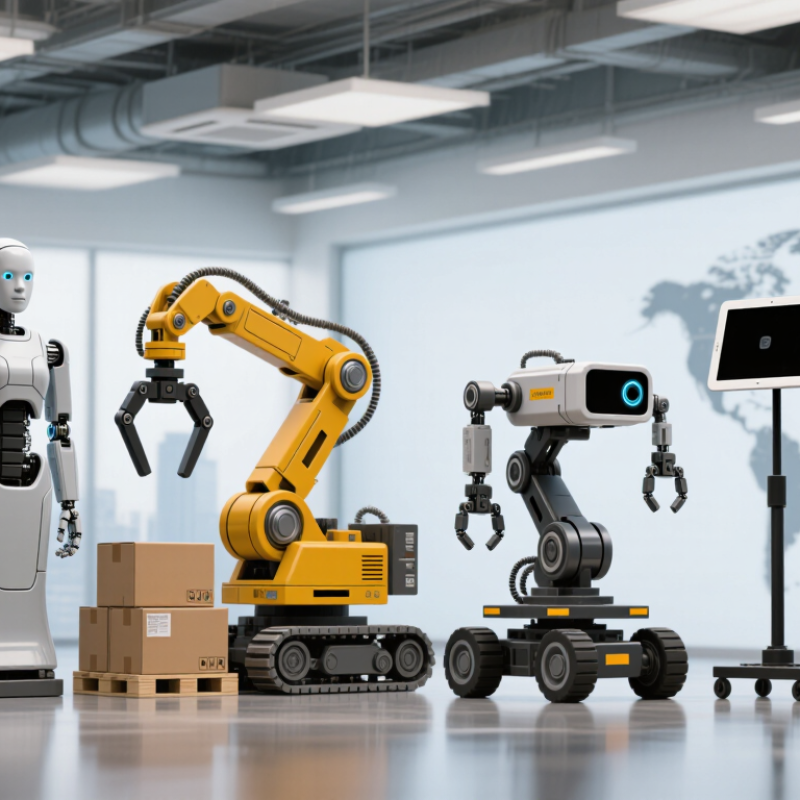
Global Online Robot Categories: Industrial, Service, Mobile, and Social Units
Industrial robots suit factories, warehouses, and workshops with repeatable tasks. They can weld, pick, pack, or inspect parts with steady accuracy. Buyers should check payload, reach, cycle time, safety sensors, and maintenance access. A robot that performs well in a demo may struggle with dust, glare, or uneven materials.
Service robots support hospitals, hotels, offices, and public facilities. They may deliver items, guide visitors, clean floors, or monitor restricted areas. Mobile robots need reliable navigation, obstacle detection, battery endurance, and smooth operation on ramps. Social robots focus on conversation, education, or reception duties. Their microphones, language support, privacy controls, and response limits deserve careful testing. Human supervision still matters.
Tips: Ask for a live trial using your actual floor, lighting, workload, and network conditions. Request maintenance schedules, training details, spare-part plans, and performance records. Compare total operating cost, not only the purchase price. I once underestimated staff training time; that mistake changed my evaluation checklist. “Simple to use” is not always simple. For global buyers, confirm voltage requirements, documentation quality, local service capacity, and applicable safety rules before ordering.
2026 Best Types of Online Robots for Global Buyers
Global robot categories include industrial, service, mobile, and social units. The chart uses publicly reported 2023 global installations or sales as a practical indicator of category scale. Mobile and social robots are specialized segments within professional service robotics, so the categories may overlap.
Industrial robots recorded approximately 541,000 global installations in 2023. Professional service robots exceeded 205,000 units, while transport and logistics robots represented approximately 113,000 units. Education and entertainment robots, which include many social-robot applications, accounted for approximately 6,800 units. Figures are based on publicly reported International Federation of Robotics market categories and rounded where applicable.
2023 Benchmark: 541,302 Industrial Robots Installed Worldwide, Reports IFR
2026 Best Types of Online Robots for Global Buyers
The 2023 IFR benchmark recorded
541,302
industrial robots installed worldwide. This figure shows strong automation demand, but it needs careful reading. It measures yearly installations, not every robot operating globally. It also does not reveal each factory’s production goals, workforce skills, or maintenance capacity.
Global buyers can compare
articulated robots,
SCARA systems,
delta robots,
collaborative robots, and
autonomous mobile units
through online suppliers. Articulated models suit welding, handling, and complex assembly. SCARA robots work well for fast, precise pick-and-place tasks. Delta systems support lightweight sorting at high speed. Collaborative robots may fit flexible workstations, but safety assessment remains essential. Online images can mislead. A compact robot may still require large working clearance, special tooling, and trained technicians.
Tips:
Check payload, reach, cycle time, accuracy, controller language, spare-part access, and regional service support. Request application videos using similar materials. Confirm electrical standards and documentation before payment. Ask about integration tests, operator training, and warranty limits. A low listed price can hide tooling, shipping, software, and installation costs. My practical concern is simple: buyers often compare robot arms, but forget the complete cell. That mistake can delay production. Also, no specification sheet replaces a real sample test.
Autonomous Mobile Robots: LiDAR, SLAM, Payload, and ISO 3691-4 Safety
2026 Best Types of Online Robots for Global Buyers
Autonomous mobile robots are becoming practical tools for warehouses, hospitals, and factories. The International Federation of Robotics reported nearly 205,000 professional service robots sold in 2023, a 30% year-on-year increase. This growth signals demand, but unit volume alone does not prove operational value.
LiDAR helps an AMR detect walls, racks, people, and changing obstacles. Good LiDAR is not enough. SLAM must build and update a reliable map when pallets move or lighting changes. In my testing experience, narrow aisles expose weak localization quickly. The robot may hesitate, reroute, or stop beside a familiar shelf. That detail matters more than a polished specification sheet. Buyers should check localization accuracy, recovery behavior, and performance around reflective surfaces.
Payload selection requires real measurement. A robot rated for 500 kilograms may perform poorly with uneven loads, sharp turns, or sloped floors. Leave practical capacity below the advertised limit. ISO 3691-4 addresses safety requirements for driverless industrial trucks, including protective sensing, stopping, and operating zones. Compliance evidence should include risk assessment, validation records, and site-specific testing. The ISO standard does not remove every hazard. Human traffic, loose packaging, and incomplete maps still require supervision. Interact Analysis also identifies mobile robots as a fast-growing automation segment, yet forecasts can vary by region and application. That uncertainty deserves attention before making a global purchase.
Buyer Evaluation Metrics: Reach, Speed, IP Rating, MTBF, ROI, and TCO
For global buyers, online robots should be judged by working conditions, not attractive specifications. Reach must cover the full task area without forcing awkward repositioning. Speed matters, but fast movement is useless if accuracy drops near people or shelves. Check cycle time with the intended payload. IP rating shows resistance to dust and water, yet it does not guarantee survival in every factory. A higher rating may also increase purchase and maintenance costs.
Tips: Request test data using your payload, temperature range, and floor conditions. Measure reach from the actual mounting point. Ask how MTBF was calculated, because laboratory figures can differ from field experience. Review service response times, spare-part access, and operator training before approval. Real tests are rarely neat.
ROI should include output gains, labor changes, rejected products, and downtime. TCO goes further, covering integration, software, energy, calibration, repairs, and eventual replacement. A robot with a lower purchase price may become expensive after repeated stoppages. Compare the expected payback period with the equipment’s realistic service life. MTBF is useful, but it is not a promise. Weather, dust, uneven maintenance, and overloaded joints can shorten it sharply. I have seen spreadsheets look convincing until installation exposed missing costs. Buyers should keep assumptions visible and challenge optimistic figures. The best choice is not always the fastest robot; it is the one that delivers stable performance under documented conditions.
Global Compliance and Sourcing: CE, FCC, ISO 10218, Support, and Warranty
2026 Best Types of Online Robots for Global Buyers
For global buyers, compliance begins with evidence, not attractive product photos. The International Federation of Robotics reported 541,302 industrial robot installations worldwide in 2023, showing strong demand for verifiable safety and support systems (IFR, World Robotics 2024). A CE mark may indicate conformity with applicable European requirements, but it is not a universal quality certificate. Request the EU Declaration of Conformity, technical documentation, and relevant test reports. For products containing wireless functions, check FCC authorization or supplier evidence for applicable United States requirements.
Safety documentation must match the robot’s real working conditions. ISO 10218 addresses industrial robot safety, while integration may also require guarding, emergency stops, and risk assessment. Ask whether the supplier follows the current ISO 10218 edition and provides clear installation limits. A laboratory report without machine-specific validation can mislead buyers. That mistake is common.
Support matters after delivery. Confirm spare-part availability, remote response times, software update policies, training, and local service coverage. Warranty terms should define labor, shipping, replacement parts, exclusions, and repair timelines. A twelve-month warranty sounds useful, yet weak response procedures can make it nearly meaningless. Buyers should test technical support before purchase by sending practical questions about payload, voltage, calibration, and fault recovery. Keep the replies. They reveal expertise better than a sales page. Language gaps still cause delays. In my view, a slightly less capable robot with transparent compliance records and dependable support is often the safer global purchase.