What Is the Best Lockout Station Supplier in China?

Choosing the best Lockout Station supplier in China requires more than comparing prices, logos, or catalog size. It requires evidence.

The U.S. Occupational Safety and Health Administration estimates that lockout/tagout procedures prevent approximately 120 fatalities and 50,000 injuries annually. OSHA’s Control of Hazardous Energy standard, 29 CFR 1910.147, also emphasizes documented procedures, employee training, and periodic inspections. These figures show why a station is not merely a wall-mounted box. It supports real decisions during maintenance, where a missing tag or weak hasp can create serious exposure.

A reliable Chinese supplier should demonstrate practical manufacturing experience and traceable quality controls. Look for impact-resistant materials, clear labeling, corrosion protection, and modular layouts for locks, tags, breakers, and valve devices. Ask for inspection records, material specifications, factory audit evidence, and product samples. ISO 45001 principles also support a risk-based approach, although certification alone does not prove product performance. That distinction matters.

The best supplier should understand different machinery, plant sizes, and workplace languages. It should provide consistent dimensions and dependable replenishment. Independent testing can strengthen confidence, especially for electrical or chemical environments. However, no catalog can replace site assessment.

That assumption deserves scrutiny.

A low-cost Lockout Station may appear efficient, yet poor visibility, brittle plastic, or unclear instructions can weaken an otherwise sound safety program. This guide compares Chinese suppliers through product quality, customization, compliance support, production capability, and after-sales reliability. It focuses on evidence, not marketing promises, while recognizing that every facility has different hazards and purchasing priorities.
What Is the Best Lockout Station Supplier in China?

What Makes a Lockout Station Supplier Reliable in China?

A reliable lockout station supplier in China proves value through field experience, not polished photos. In maintenance areas, a station must keep locks, tags, hasps, and instructions visible and reachable. I have seen poorly planned boards become cluttered within weeks. That small failure can slow an emergency shutdown.

An experienced supplier asks practical questions before quoting. How many technicians use the station? Is it installed beside electrical panels, machinery, or a workshop entrance? Does the site need wall mounting, portable storage, or separate compartments? The answer should shape the design. Product materials also matter. Impact-resistant plastic suits many indoor areas, while coated metal may better handle dust and repeated handling. Still, material claims should be supported by test records, not attractive wording.

Reliability also depends on traceability and communication. A capable supplier can provide clear drawings, item lists, sample checks, packaging photos, and consistent replacement support. Production inspections should cover hole alignment, label readability, latch strength, and missing components. Delivery promises need realistic lead times. I would question a supplier that agrees to everything immediately. That feels convenient. Not always. Ask for documented quality procedures, relevant test evidence, and a responsive technical contact. Small details often reveal the real working standard.

Which Lockout Station Products Do Chinese Suppliers Provide?

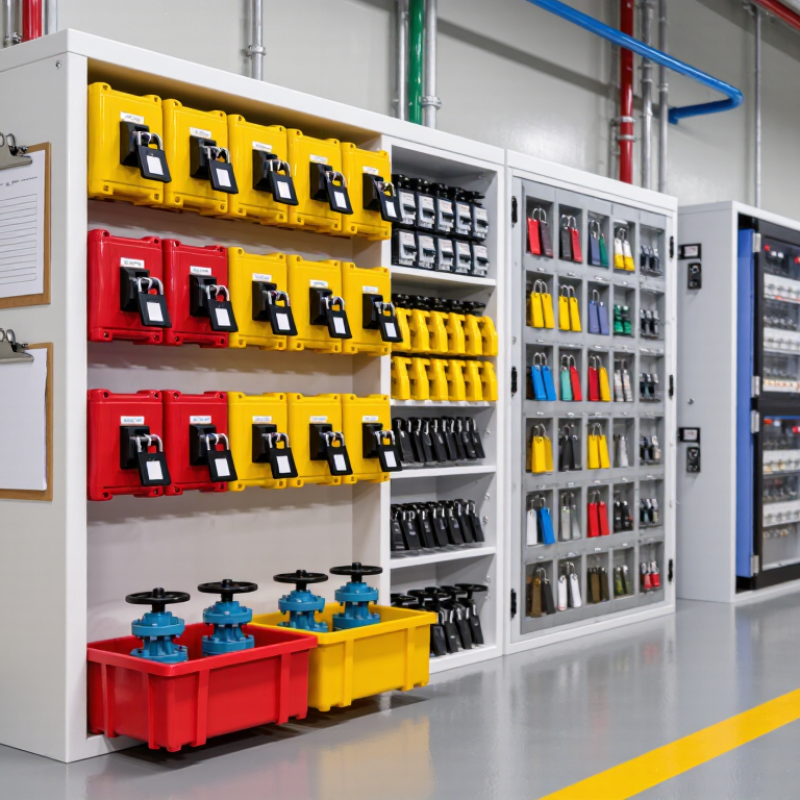
Chinese lockout station suppliers provide more than a wall board with padlocks. Their product ranges often cover complete lockout and tagout solutions for electrical, mechanical, hydraulic, and pneumatic equipment. A standard station may include safety padlocks, lockout tags, hasps, breaker lockouts, valve covers, cable devices, and group lock boxes. Some suppliers also provide portable kits for maintenance teams working across several production areas.

Wall-mounted stations suit workshops with fixed maintenance points. They usually contain labeled hooks, transparent covers, and space for spare devices. Portable cases may include compact tools, colored locks, warning tags, and adjustable cable locks.

Suppliers can also produce customized boards based on equipment types, workforce size, and storage space. This is useful, but customization requires accurate site information. Otherwise, the station may look complete while missing one critical device.

Experienced buyers should examine material strength, lock consistency, tag readability, and replacement availability. Stainless steel, reinforced plastic, and weather-resistant labels may suit different environments. Requesting product samples, inspection records, and traceability documents helps verify reliability. Suppliers with documented testing procedures usually offer better control over repeated orders. Still, no supplier gets every detail right. A trial order can reveal weak hinges, unclear markings, or awkward storage layouts before larger purchasing decisions.

How to Evaluate Chinese Lockout Station Suppliers

What Is the Best Lockout Station Supplier in China?

How to Evaluate Chinese Lockout Station Suppliers

A dependable supplier should understand workplace risks, not only manufacture plastic panels. Check whether the station keeps locks, tags, hasps, and labels organized. Ask for material details, load tests, surface-finish data, and product drawings. Clear answers show technical competence. Vague promises do not.

Request a sample before placing a large order. Inspect the wall holes, label visibility, compartment strength, and edge finishing. Small defects matter. During supplier evaluation, review factory quality procedures and batch inspection records. An ISO 9001 system can support consistency, but it is not proof of every product’s performance. Ask for current test reports and traceable production records. Confirm whether the supplier can meet applicable workplace-safety requirements in your market.

Communication also reveals reliability. A professional team should explain lead times, packaging methods, replacement policies, and customization limits. Check how they handle a damaged sample or a late shipment. That response may be more useful than a polished catalogue. I have seen attractive stations fail because labels peeled off in humid storage rooms. The lesson is uncomfortable: appearance alone is weak evidence. Compare several samples, record your findings, and keep written specifications before approving production. Overlooking one detail can create repeated problems across many work areas.

What Is the Best Lockout Station Supplier in China? - How to Evaluate Chinese Lockout Station Suppliers

No. Evaluation Dimension What to Verify Reliable Evidence Suggested Weight Practical Benchmark
1 Product Compliance Whether lockout stations, padlocks, tags, hasps, and accessories are designed for hazardous-energy control. Technical files, test reports, declarations, and product specifications. 20% Products should support applicable requirements such as OSHA 29 CFR 1910.147 and relevant ISO 14118 principles.
2 Material and Durability Resistance to impact, corrosion, ultraviolet exposure, chemicals, and repeated workplace use. Material grades, salt-spray or corrosion data, impact-test records, and sample inspection. 15% Metal components should have corrosion-resistant finishes; plastic parts should be suitable for the stated operating environment.
3 Product Range Availability of wall-mounted stations, portable kits, padlocks, tags, breaker lockouts, valve lockouts, and group lockout devices. Current catalog, product drawings, compatibility lists, and sample kit contents. 15% A capable supplier should cover the main electrical, mechanical, hydraulic, pneumatic, and valve isolation applications.
4 Manufacturing Quality Control Consistency of dimensions, color, printing, locking function, and assembly quality between production batches. Quality manual, inspection procedures, batch records, calibration records, and pre-shipment inspection reports. 15% The supplier should use documented incoming, in-process, and final inspection procedures with traceable records.
5 Customization Capability Ability to provide custom colors, warning labels, languages, logos, station layouts, and kit configurations. Approved artwork, engineering drawings, prototypes, and documented revision control. 10% Custom printing and packaging should be supported without changing safety-critical dimensions or functions.
6 Lead Time and Capacity Ability to meet sample, trial-order, and repeat-order schedules with stable production capacity. Written production schedule, capacity statement, historical delivery records, and purchase-order terms. 10% For standard items, a clear quotation should state sample timing, production lead time, and shipment method.
7 Minimum Order Quantity Whether minimum quantities are reasonable for standard products, customized products, and trial orders. Formal quotation showing minimum order quantities, tooling charges, and sample policy. 5% A transparent supplier separates standard-item pricing from customization, tooling, printing, and packaging costs.
8 Export and Documentation Support Ability to provide accurate commercial, technical, packaging, and shipping documentation. Packing list, commercial invoice, HS-code information, product datasheets, and export references. 5% Documents should match the ordered products, quantities, packaging, and destination-country requirements.
9 Communication and After-Sales Service Responsiveness, technical support, complaint handling, replacement policy, and corrective-action capability. Service terms, response-time commitments, warranty policy, and corrective-action reports. 5% The supplier should provide a defined contact channel and a documented process for quality claims and replacements.
Total Evaluation Weight 100% Select suppliers using documented evidence, product samples, and a weighted score rather than price alone.
Recommended scoring method: Rate each dimension from 1 to 5, multiply the rating by its suggested weight, and compare the total score after sample testing and document verification.

How Do Chinese Suppliers Compare in Quality, Price, and Service?

Choosing the best lockout station supplier in China requires more than comparing catalog prices. In factory audits, I have found that quality appears in small details. A sturdy station should use impact-resistant material, clear labels, smooth hinges, and secure mounting points. The supplied locks, tags, and hasps should also feel consistent, not mixed from unrelated batches. Ask for material specifications, inspection records, sample approvals, and production photos. A reliable supplier can explain how defects are controlled and how products are traced.

Price still matters. However, the lowest quotation may exclude packaging, replacement parts, testing, or delivery protection. Compare complete costs per station, not only the unit price. Chinese suppliers often provide competitive pricing because of established manufacturing networks and flexible production volumes. Service can separate similar offers. Check response times, sample revisions, language accuracy, and after-sales support. Can the supplier adjust label layouts quickly? Can they replace damaged components without confusing paperwork? My early mistake was trusting polished samples too quickly. The first shipment revealed uneven printing and loose fasteners. That experience changed my process: approve a written specification, test a production sample, and inspect random cartons before dispatch. Some suppliers may resist these steps. That hesitation deserves attention.

How to Choose the Best Lockout Station Supplier in China

What Is the Best Lockout Station Supplier in China?

Choosing the best lockout station supplier requires more than comparing prices. Start by checking product experience, factory capacity, and quality controls. A reliable supplier should provide clear specifications for cabinets, hooks, labels, locks, and accessory storage. Ask whether materials resist impact, dust, and daily workplace handling. Request product samples before placing a large order. A sample often reveals weak hinges, unclear labels, or poor surface finishing.

Supplier verification matters just as much as product design. Review manufacturing records, inspection procedures, and traceability documents. Confirm that the supplier can support customized layouts, colors, language, and mounting options. It should also provide accurate packing details and stable lead times. During communication, notice how quickly the team answers technical questions. Vague replies may create problems later. I have found that low prices can hide inconsistent batches, although price alone is not proof of poor quality.

Tips: Compare at least three suppliers. Ask for recent inspection reports and material information. Check whether replacement parts are available. Confirm carton protection with photos before shipment. A small trial order is safer than a rushed decision. Also, request installation guidance for real workplaces, such as factory entrances, maintenance rooms, and electrical control areas. Do not overlook after-sales support; even a well-designed station may need revised labels or additional accessories after actual use. Sometimes, my first specification is not practical enough, so feedback from workers should influence the final selection.

Smart Robotics brand movie

Watch video