10 Best Inline Duct Fan Motors for Global Buyers

Choosing the 10 Best Inline Duct Fan Motors for Global Buyers starts with more than comparing advertised airflow. An Inline Duct Fan Motor must suit the duct diameter, required static pressure, operating hours, and installation environment. A mismatch can mean weak airflow, excess noise, or avoidable energy use.

The International Energy Agency’s 2024 Global Status Report for Buildings and Construction estimates that buildings and construction account for about 32% of global energy demand and 34% of energy- and process-related CO₂ emissions. Those figures cover much more than ventilation, but they underline why efficient building systems matter. For buyers, motor efficiency is only one part of the decision. Check performance curves, speed control, sound ratings, service access, voltage, and the manufacturer’s test documentation. Small details matter. A fan that performs well in a catalog may behave differently in a long, restrictive duct run.

This guide compares ten options through practical selection criteria, including airflow under pressure, motor design, durability, and suitability for different applications. It also considers regional power requirements and the availability of replacement parts, which can affect long-term ownership costs. Specifications are useful, not perfect. Published ratings may come from different test conditions, so direct comparisons deserve caution. Buyers should confirm installation requirements with current product data and qualified ventilation professionals before purchasing.
10 Best Inline Duct Fan Motors for Global Buyers

How Inline Duct Fan Motors Work and Where They Are Used

An inline duct fan motor turns an impeller inside a short housing fitted directly into ductwork. As the blades rotate, they create a pressure difference that moves air through the system. The motor may use alternating current or electronically commutated technology; speed control and efficiency vary by design. The fan’s airflow rating alone does not tell the whole story. Duct length, bends, filters, and grilles all add resistance.

These fans appear in homes, workshops, offices, and light commercial buildings. A bathroom unit can help remove humid air, while a larger installation may support fresh-air supply or exhaust from a work area. Installers often place the fan in an accessible ceiling void or service space. Keep enough room around it for inspection and maintenance. Noise matters, too. A fan that sounds quiet on a bench may hum through a poorly supported duct.

Choosing a motor means matching its performance to the actual system, not just the duct diameter. Check airflow at the expected static pressure, electrical requirements, speed-control compatibility, and operating temperature. For example, a long duct with several tight elbows may need more pressure capability than a short, straight run. It is easy to overlook vibration; flexible connectors and secure mounting can help, but they do not fix every installation problem. Real systems can be messier than the drawings.

Motor Types, Performance Ratings, and Compatibility Factors

Inline duct fan motors differ in control, efficiency, and installation needs. AC induction motors are common and straightforward to control, while electronically commutated motors often allow speed adjustment with lower electrical losses. The IEA’s 2011 report, Energy-Efficiency Policy Opportunities for Electric Motor-Driven Systems, estimates that motor-driven systems consume about 45% of global electricity. That figure covers many applications, not duct fans alone. It still shows why comparing watts with delivered airflow matters.

Check airflow and static-pressure ratings together; a high airflow figure alone can mislead when ducts are restrictive. ANSI/AMCA 210 and ASHRAE 51 describe standardized methods for testing fan airflow performance. Compare test conditions, not just headline numbers. Small detail. Then verify voltage, frequency, motor dimensions, mounting points, rotation, and speed-control compatibility against the existing unit. A controller designed for one motor type may not work with another. Also check operating temperature and enclosure protection for the actual installation. In practice, a few millimeters of mismatch can complicate mounting, and published sound ratings may not reflect a hard-walled duct. I would leave a small margin in the selection; real duct layouts rarely match a perfect test setup.

10 Best Inline Duct Fan Motors for Global Buyers - Motor Types, Performance Ratings, and Compatibility Factors
Motor type Typical power range Typical motor efficiency Speed control Common supply and control Best suited to Key compatibility checks
EC external-rotor motor 20–250 W About 60–85% Usually smooth electronic control; some versions accept 0–10 V or PWM Often single-phase AC input with an integrated electronic controller; verify the rated voltage and frequency Compact inline fans prioritizing efficiency and controllability Controller input, wiring, rotor dimensions, mounting, and fan impeller match
EC internal-rotor motor 50–500 W About 65–90% Electronic speed control; interface varies by controller AC input or a specified DC supply, depending on the integrated drive Applications needing precise speed adjustment and a compact motor package Confirm whether the drive is built in, the control signal, supply range, and shaft or bracket dimensions
Permanent-split-capacitor (PSC) motor 15–200 W About 35–65% Limited; use only a control method approved for the motor Single-phase AC with a run capacitor; voltage and frequency are model-specific Small, cost-conscious ventilation systems with straightforward operation Capacitor rating, supply frequency, rotation, thermal protection, and approved speed controller
Shaded-pole motor 5–40 W About 15–35% Generally limited; speed adjustment can reduce torque Single-phase AC; confirm rated voltage and frequency Very small, low-pressure ventilation duties where low cost matters more than efficiency Check starting torque, allowable temperature, noise, and suitability for the required airflow resistance
Single-phase capacitor-run induction motor 50–500 W About 50–75% Limited to moderate, depending on motor design and controller Single-phase AC with a specified capacitor arrangement Small and medium fans where a conventional AC motor is preferred Capacitor and wiring diagram, supply frequency, mounting, and controller compatibility
Three-phase squirrel-cage induction motor 0.18–2.2 kW About 70–90%, depending strongly on motor size and design Good with a correctly sized variable-frequency drive (VFD) Three-phase AC; common system voltages differ by region Commercial ventilation and larger inline fan assemblies Phase, voltage, frequency, pole count, frame, rotation, overload protection, and VFD setup
Inverter-duty three-phase induction motor 0.37–5.5 kW About 75–92%, depending on rating and efficiency class Wide operating range with a compatible VFD and appropriate cooling Three-phase AC motor supplied through a VFD Continuous-duty systems needing frequent or broad speed adjustment Insulation rating, low-speed cooling, VFD output, cable length, and motor thermal protection
Permanent-magnet synchronous motor with external drive 50 W–1 kW About 70–90% for the motor; system efficiency also depends on the drive Precise control through a matched electronic drive Drive-dependent; typically requires a compatible inverter output Efficient variable-speed fan assemblies with a separately selected controller Motor-drive pairing, feedback or sensor requirements, voltage, and starting sequence
Brushless DC (BLDC) motor with controller 10–300 W About 60–85% for the motor; controller losses vary Good electronic speed control; control interface is model-specific Low-voltage DC or rectified AC through a specified controller Compact, low-voltage, or electronically controlled fan systems DC voltage, current capacity, controller type, polarity, connectors, and speed signal
Universal brushed motor 20–250 W About 50–75% Broad speed range with a suitable controller AC or DC, only within the motor’s specified ratings Compact or intermittent-duty designs where variable speed and size are priorities Brush and commutator wear, electrical noise, duty cycle, ventilation, and controller rating

Ratings are indicative ranges for motor types, not guaranteed specifications for a particular fan. Actual efficiency, airflow, noise, and operating limits depend on the motor size, fan impeller, housing, duct resistance, supply conditions, and controller. Confirm local electrical requirements and the manufacturer’s motor and fan documentation before selection.

Ten Leading Inline Duct Fan Motors for Global Buyers

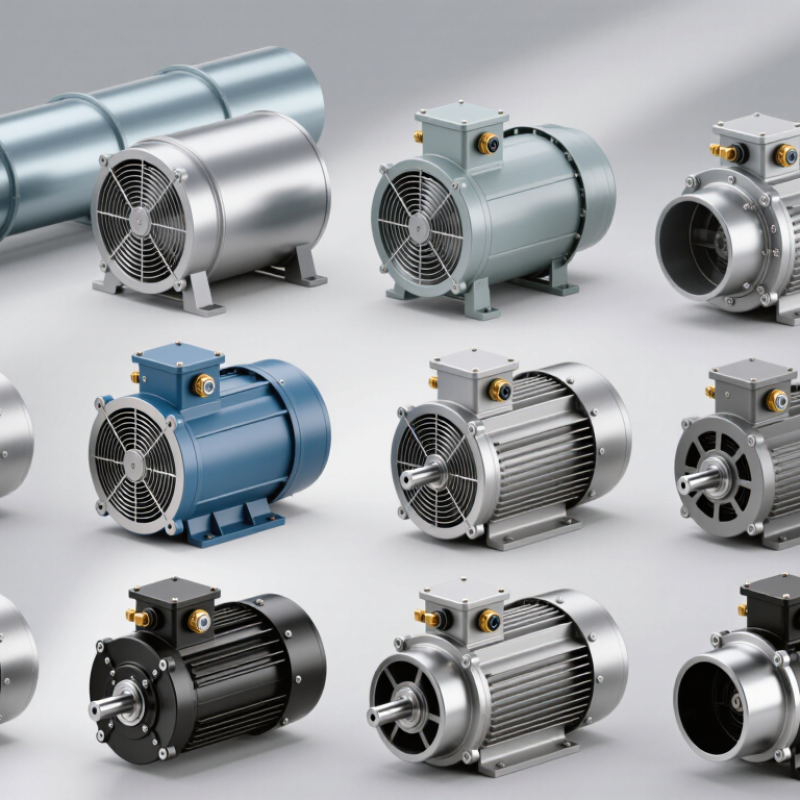
Global buyers comparing ten leading inline duct fan motor configurations should match the motor to the duct system, not just the catalogue airflow. EC motors offer efficient electronic speed control, while AC induction and permanent-split-capacitor designs are familiar options for steady-duty ventilation. Shaded-pole motors suit some smaller, lighter-duty units, but may not fit demanding pressure conditions. Single-phase capacitor-run and three-phase induction motors can serve different supply and capacity needs. External-rotor layouts are compact; internal-rotor designs may simplify some service arrangements. Direct-drive construction avoids belt maintenance, and speed-control-ready motors allow airflow adjustment. Check the curve.

Practical details separate a good fit from an expensive mismatch. Confirm supply voltage and frequency, then compare airflow at the system’s actual static pressure. A fan tested in open air may deliver less once connected to long ducts, bends, filters, or grilles. Look for bearing type, thermal protection, insulation rating, and a clearly stated operating range. Noise matters. Ask for test data and control compatibility, especially when replacing equipment across regions. A common mistake is choosing by motor wattage alone; it says little about delivered airflow. I would also question vague efficiency claims, because test conditions can differ. Allow access to the motor for inspection, and consider whether local technicians can obtain compatible replacement parts.

How to Compare Efficiency, Noise, Controls, and Durability

10 Best Inline Duct Fan Motors for Global Buyers

How to Compare Efficiency, Noise, Controls, and Durability

Efficiency starts with the fan’s actual airflow and static-pressure needs, not a large number on a product sheet. Compare power draw at the operating point you expect, and check whether performance data includes pressure conditions. A motor that runs efficiently in a wide, clean duct may struggle in a long system with bends or restrictive filters. Match the motor to the duct layout. Oversizing can waste energy and create more noise than expected.

Listen before buying. Noise ratings help, but measurement distance and room conditions can change what a number means. Look for speed-control options that suit the installation, such as adjustable settings or compatible external controls. Confirm the control method and supply voltage before ordering; global listings do not always describe these clearly. A smooth low-speed setting can be useful in a bedroom, while a workshop may need stronger airflow.

Durability depends on more than a sturdy-looking housing. Check motor protection, bearing details, temperature limits, and whether replacement parts are available. Consider humidity, dust, and access for cleaning. Small details count. I may be giving service access too much weight, but a fan that is hard to inspect can stay dirty for months. Compare warranty terms and technical documents, then weigh them against the installation conditions—not just the lowest price.

How to Choose a Motor for Regional Standards and Installation Needs

Choosing an inline duct fan motor starts with the supply, not the catalogue photo. Confirm local voltage, 50 or 60 Hz frequency, phase, wiring, and required conformity markings. A motor rated for the wrong frequency may run at a different speed, affecting airflow and noise. Check the nameplate. Then compare the motor’s output with the fan curve at the actual duct resistance, including bends, filters, and grilles. A high free-air airflow figure can be misleading once the fan is installed.

Installation details matter just as much. Measure the duct diameter and available clearance, and check whether the motor allows the intended mounting position. In humid or dusty locations, review the enclosure rating and thermal protection. The U.S. Department of Energy’s 2014 motor-systems sourcebook estimates that motor-driven systems use about 68% of electricity in U.S. manufacturing; this is not a duct-fan figure, but it shows why efficiency deserves attention. For fan comparisons, AMCA Publication 205 defines the Fan Energy Index (FEI), helping buyers assess energy performance under specified conditions. Ask suppliers for test conditions, not just a headline rating. I would still recheck the wiring diagram before ordering; regional documentation can be surprisingly easy to overlook.

10 Best Inline Duct Fan Motors for Global Buyers - How to Choose a Motor for Regional Standards and Installation Needs

Representative Nominal Single-Phase Supply Voltage by Market

Voltage shown is a representative nominal value for common single-phase supplies, not a complete description of every local installation. Before choosing an inline duct fan motor, check the site supply and the motor nameplate for both voltage and frequency. Supply arrangements vary within some markets; Japan also has regional 50 Hz and 60 Hz grids.

Smart Robotics brand movie

Watch video