Top Benefits of Using Pick and Place Robots in Modern Manufacturing?
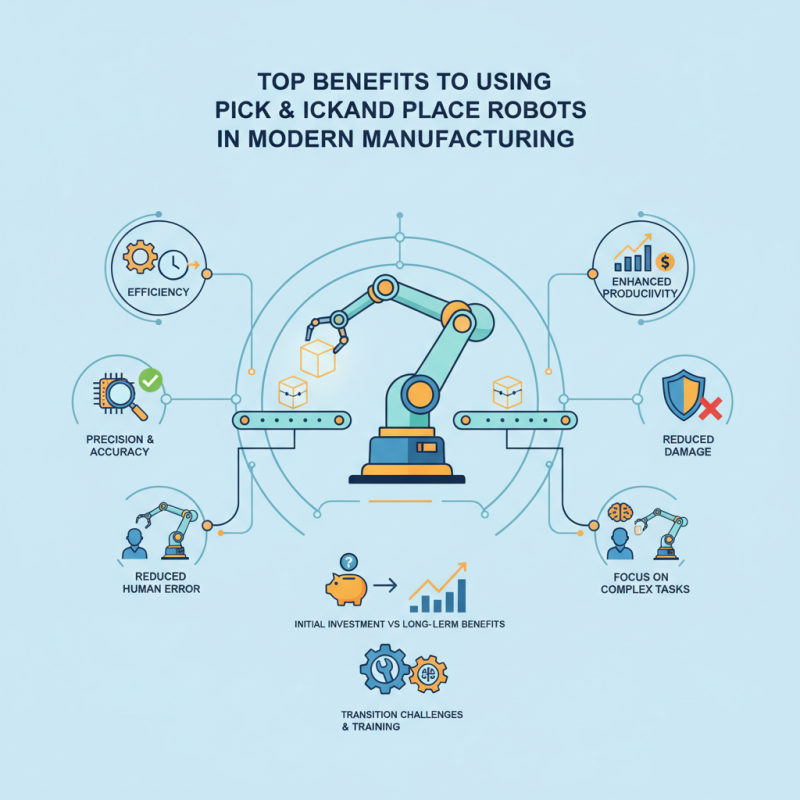
The increasing complexity of modern manufacturing demands efficient solutions. One answer lies in the use of pick and place robots. These automated systems excel in tasks that require precision and speed. By swiftly moving items from one location to another, they minimize human error and enhance productivity.
Implementing pick and place robots directly impacts production lines. They handle components with accuracy, reducing the risk of damage. As industries strive for high throughput, reliance on these machines has grown. However, the initial investment can be daunting, and companies must weigh the costs against the benefits.
The advantages of pick and place robots are clear. They not only streamline operations but also free human workers for more complex tasks. Yet, it’s essential to reflect on the transition challenges. Training staff to work alongside these machines can take time. Ultimately, understanding the role of pick and place robots in manufacturing is critical to future success.
Understanding Pick and Place Robots: A Comprehensive Overview
Pick and place robots are transforming modern manufacturing with speed and precision. These robots excel at handling repetitive tasks. They can move items swiftly and accurately across production lines. According to a report from the International Federation of Robotics, the adoption of these robots has increased by about 30% in the past three years. This surge indicates a growing trend toward automation in various industries.
In sectors like electronics and food packaging, pick and place robots enhance efficiency. They reduce cycle times significantly, which leads to higher throughput. For example, a survey by Statista revealed that companies implementing these robots experienced a productivity boost of 20-40%. However, the implementation of robotics does pose challenges. Training staff to work alongside machines can be a complex process.
Moreover, integration with existing systems is not always straightforward. While errors can occur, monitoring software and continuous improvement processes help mitigate risks. Many manufacturers are learning to adapt these robots to their specific needs. This requires a patient approach to experimentation and adjustment. Ultimately, the benefits of automation must be weighed against the learning curve it entails.
Top Benefits of Using Pick and Place Robots in Modern Manufacturing
| Benefit |
Description |
Impact |
| Increased Efficiency |
Pick and place robots can work continuously without breaks, increasing overall production output. |
Boosts manufacturing speed and reduces cycle times. |
| Enhanced Precision |
These robots are programmed for precision, minimizing errors in placement. |
Results in higher product quality and reduced waste. |
| Cost Savings |
Automation reduces labor costs and increases productivity. |
Long-term savings on operational expenses. |
| Flexibility |
Pick and place robots can be easily reprogrammed for different tasks. |
Allows manufacturers to adapt quickly to changing product lines. |
| Improved Safety |
Reduces the need for human involvement in potentially dangerous tasks. |
Minimizes workplace accidents and injuries. |
Key Features of Pick and Place Robots in Manufacturing Environments
Pick and place robots have revolutionized manufacturing environments, showcasing notable features that enhance efficiency. These robots can pick items from various locations, then place them precisely where needed. They typically include advanced vision systems for accurate identification and grasping of products. According to a report by the International Federation of Robotics, manufacturing productivity has increased by 30% due to automation, including the use of these robots.
Flexibility is one key feature of pick and place robots. They can handle various product shapes and sizes, adapting easily to changes in production lines. This adaptability is essential in industries that require quick transitions between different products. However, not all robots are created equal. Some may struggle with complex tasks or delicate items, leading to potential errors. A study highlighted that nearly 20% of operational downtime is linked to robotic malfunctions or limitations.
Another vital aspect is user interaction. Many robots have now integrated machine learning, enabling them to improve over time. This feature enhances their ability to identify and manipulate products with greater precision. Despite these advancements, there remains a learning curve for operators. Extensive training is often required to utilize the robots effectively, which can initially hinder productivity. Continuous evaluation is necessary to ensure such technologies meet the intended goals.
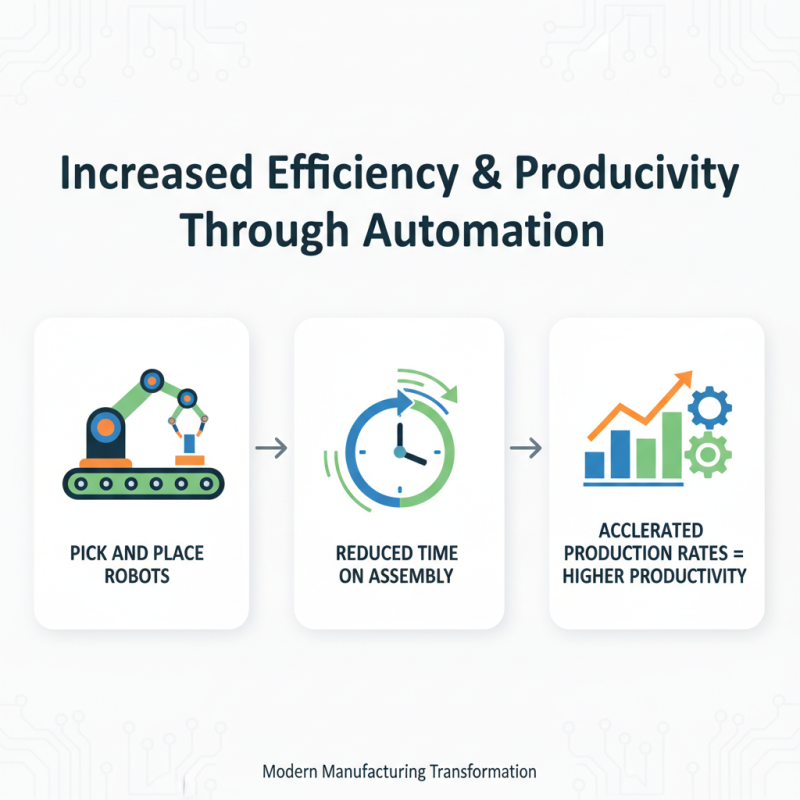
Increased Efficiency and Productivity Through Automation
In modern manufacturing, automation is transforming efficiency and productivity. Pick and place robots play a critical role in this shift. They quickly handle repetitive tasks, reducing the time spent on assembly lines. This acceleration can have a significant impact on production rates.
These robots improve reliability on the shop floor. They consistently perform tasks without fatigue or loss of focus. Businesses can often achieve higher output with fewer errors. However, one must consider the initial investment in robotics. Training staff to work alongside these machines can also present challenges. Each transition phase requires careful planning and adjustment.
Moreover, the use of pick and place robots allows for real-time data collection. They can track performance metrics, highlighting areas for improvement. Despite the benefits, companies should remain open to addressing issues that arise. Automation is not a one-size-fits-all solution; ongoing evaluations are essential to maximize its benefits in manufacturing.
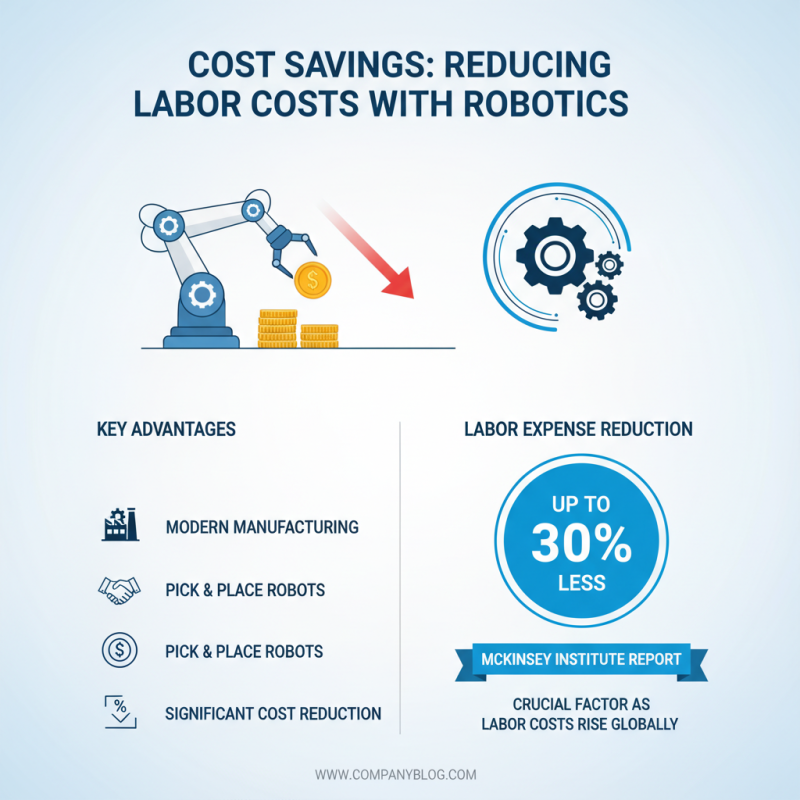
Cost Savings: Reducing Labor Costs with Robotics
In modern manufacturing, pick and place robots are changing the game. One significant advantage is in cost savings, where companies can reduce labor costs significantly. According to a recent report by the McKinsey Institute, automation can lower labor expenses by up to 30%. This is a crucial factor as labor costs continue to rise in many sectors.
Companies that adopt these robotic systems also benefit from increased efficiency. These robots can operate 24/7, performing tasks without breaks or fatigue. This extra output can lead to faster production cycles. However, there is a concern. While automation reduces labor needs, it may also lead to job displacement. A study from the World Economic Forum highlighted that 85 million jobs could be displaced by 2025 due to automation trends.
Still, it's important to consider the long-term perspective. The transition may incur initial costs for integrating automation. Nonetheless, many companies see a return on investment within two years. Moreover, employee retraining can create new opportunities in tech and maintenance roles. A balanced approach is key to navigating these changes successfully.
Improving Quality Control and Precision in Assembly Processes
The integration of pick and place robots in modern manufacturing significantly enhances quality control and precision during assembly. These robots are designed to perform repetitive tasks with accuracy that human hands may struggle to achieve. For example, they can pick components from a conveyor and place them exactly where needed on an assembly line, minimizing errors that can occur due to human fatigue or distraction.
When implemented effectively, pick and place robots streamline assembly processes by reducing variation in product placement. This leads to improved consistency and reduced defects in the final product. The precision of these robots allows manufacturers to maintain tighter tolerances than traditional methods, which can be crucial in industries such as electronics or automotive. However, it’s important to address potential errors, such as programming mistakes or mechanical failures, which can lead to costly disruptions.
Despite their advantages, not all manufacturers have embraced this technology. Some may hesitate due to high initial costs or the need for specialized training. They may also be concerned about relying too heavily on automation, which could lead to skill degradation in the workforce. Ultimately, while pick and place robots offer undeniable benefits in quality control and precision, each organization must weigh these against the challenges of implementation.
Top Benefits of Using Pick and Place Robots in Modern Manufacturing