2026 Top Robotic Process Automation Trends You Need to Know?
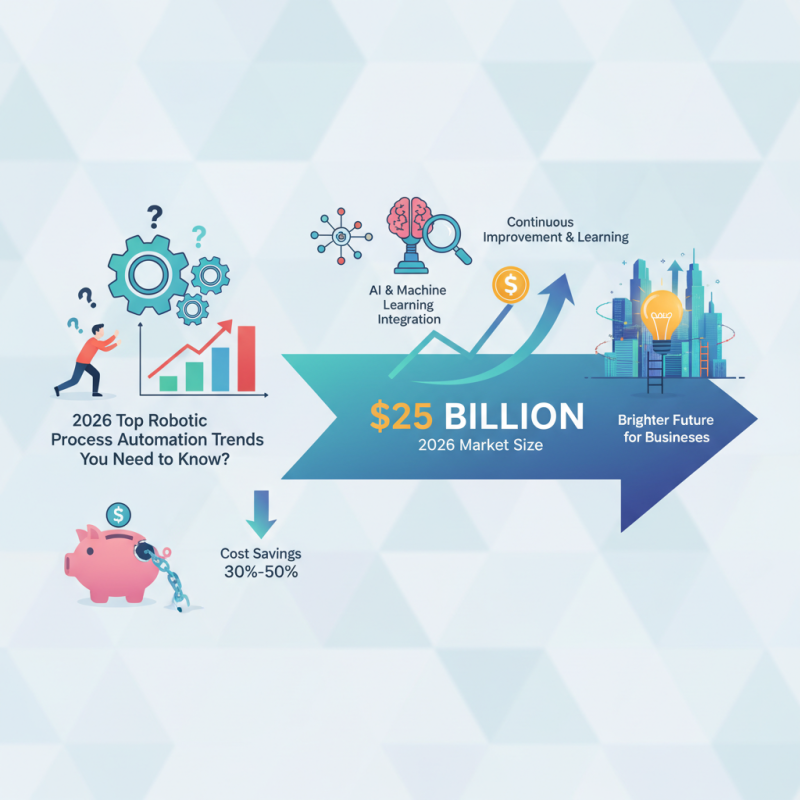
The landscape of robotic process automation (RPA) is evolving rapidly. By 2026, RPA is projected to reach an impressive market size of $25 billion, reflecting its growing significance in various industries. This technology optimizes workflow and enhances productivity, yet many organizations struggle to implement it effectively.
Incorporating RPA can lead to cost savings of approximately 30% to 50% in operational expenses. Despite these potential benefits, companies face hurdles in achieving seamless integration. A recent study highlighted that only 30% of organizations reported successful RPA deployments. This gap demands careful consideration and strategy.
Looking ahead, several key trends will shape the RPA landscape. These include advancements in artificial intelligence and machine learning integration with RPA solutions. Companies must address current limitations to fully capitalize on these opportunities. Building a culture of continuous improvement and learning is essential for optimal RPA exploitation. Embracing these trends can lead to a brighter future for businesses willing to adapt and innovate.
Key Trends Shaping Robotic Process Automation in 2026
As we look ahead to 2026, several key trends are emerging in Robotic Process Automation (RPA) that will reshape the industry. A strong emphasis on artificial intelligence integration is apparent. This combination enhances decision-making capabilities and allows for more complex task automation. Companies are exploring how to incorporate AI with RPA to improve efficiency.
Another significant trend is the rise of hyperautomation. Organizations are not only automating simple tasks but are also streamlining entire workflows. This shift demands a careful assessment of current processes. Some businesses may find that their existing frameworks are not ready for this level of automation. Evaluating readiness is crucial to avoid pitfalls.
Additionally, a focus on data security is becoming more pronounced. As automation expands, so do concerns about data privacy. Organizations must navigate these challenges and ensure their RPA initiatives comply with regulations. Neglecting security can lead to significant vulnerabilities. The landscape is evolving, and companies must adapt quickly to remain competitive while addressing these critical issues.
2026 Top Robotic Process Automation Trends You Need to Know
| Trend |
Description |
Impact |
Expected Adoption Rate |
| AI-Driven Automation |
Integration of AI technologies to enhance RPA capabilities. |
Higher efficiency and reduced errors in processes. |
75% |
| Low-Code RPA |
Tools that allow users to create automation with minimal coding. |
Enables faster deployment of automation solutions. |
68% |
| Robotic Workforce Collaboration |
Enhanced collaboration between robots and humans for better outcomes. |
Improved process efficiency through teamwork. |
70% |
| Intelligent Document Processing |
Use of RPA coupled with machine learning to process documents. |
Reduction in manual data entry and increased accuracy. |
80% |
| Cloud-Based RPA |
Adoption of RPA solutions hosted in the cloud for flexibility. |
Scalable and cost-effective automation solutions. |
65% |
Emerging Technologies Enhancing RPA Capabilities
Robotic Process Automation (RPA) is evolving rapidly.
Emerging technologies are enhancing its capabilities, making it more powerful than ever.
For instance, artificial intelligence is being integrated into RPA systems.
This synergy allows for smarter data processing and improved decision-making.
RPA is now capable of learning from experiences, which adds a layer of adaptability previously unseen.
Natural language processing (NLP) is another critical development.
It enables RPA tools to understand and interpret human language.
This capability bridges the gap between automated processes and human interactions.
Imagine chatbots handling customer queries more efficiently.
However, the implementation is not always smooth.
Many companies face challenges in training their RPA models to understand nuances in language.
Additionally, machine learning algorithms boost RPA's efficiency.
These algorithms analyze large datasets to identify patterns.
This can lead to better automation strategies.
Yet, reliance on data quality is essential.
Poor data can result in flawed decision-making.
Companies must ensure their data is accurate and relevant.
As RPA continues to integrate these technologies, the potential for innovation is vast.
Balancing technology with human oversight remains a crucial factor for success.
Integration of Artificial Intelligence in RPA Solutions
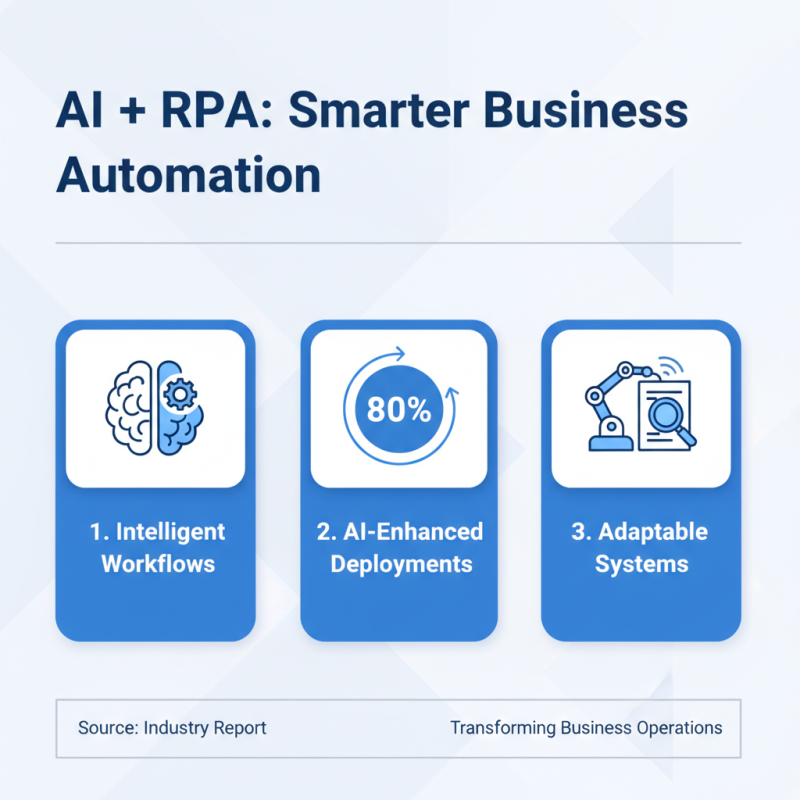
The integration of artificial intelligence (AI) into Robotic Process Automation (RPA) solutions is transforming how businesses operate. According to a recent industry report, 80% of RPA deployments are enhanced by AI capabilities. This merger allows for smarter workflows, making systems more responsive and adaptable.
AI enhances RPA by enabling machines to learn from data and improve over time. For example, natural language processing helps bots understand unstructured data. Businesses see significant potential in this synergy. However, challenges exist. Data quality and integration issues can impede effectiveness. Reports show that 30% of RPA projects fail due to inadequate training of AI models.
As companies strive for automation, the human aspect remains crucial. Employees may resist changes brought by AI-enhanced RPA. It’s essential to foster a culture of acceptance. Continuous feedback loops can help adjust systems based on user experiences. The human touch is vital, even in an automated world. Balancing technology with human insight may be the key to success.
Impact of RPA on Workforce Dynamics and Job Roles
Robotic Process Automation (RPA) is reshaping workforce dynamics in significant ways. As businesses embrace automation, job roles evolve. Many routine tasks that once required human intervention are now handled by software robots. This shift can lead to efficiency gains, but it also raises concerns about job displacement. Workers in administrative roles may find their responsibilities diminished or transformed.
In this new landscape, upskilling is essential. Employees will need to adapt to these changes by developing new skills. The focus will shift from task execution to overseeing and enhancing automated processes. This dynamic is not just a challenge; it encourages innovation and creativity. Workers can spend more time on strategic initiatives rather than mundane tasks.
However, this transition is not without its difficulties. Companies must carefully manage workforce morale and keep communication open. Some employees might feel threatened by the rise of RPA. Others may struggle to adjust to a rapidly changing environment. Leaders should foster a culture of continuous learning to ensure everyone can thrive in the new era of work.
2026 Top Robotic Process Automation Trends
Best Practices for Implementing RPA in Organizations
When implementing Robotic Process Automation (RPA) in organizations, several best practices can lead to successful outcomes. Understanding the business processes to automate is crucial. Identify areas with repetitive tasks. Evaluate the potential for increased efficiency. Involving stakeholders early helps in aligning RPA goals with business objectives.
Tips: Start small. Choose a single process to automate. Learn and iterate. This approach reduces risks. It allows for adjustments based on feedback and outcomes.
It’s important to monitor the performance of RPA solutions closely. Challenges may arise, such as integration issues with existing systems. Regularly assess the impact of automation on workflows. Not all processes will yield the expected results. Continuous improvement is key.
Tips: Encourage open communication among teams. Create a culture of adaptability. Ensure that employees feel involved in the change. They might provide valuable insights. After all, automation should enhance human roles, not replace them.