2026 Best Knurled Door Handle Types for Global Buyers

In 2026, global buyers are treating door hardware as more than a finishing detail. A Knurled Door Handle combines tactile grip, visual texture, and practical durability. Its ridged surface can feel secure with wet or gloved hands. Yet, the same texture may collect dust in high-traffic environments. That small contradiction deserves attention.

Grand View Research’s 2024 Door Hardware Market analysis identifies renovation, commercial construction, and smart-building development as important market drivers. Fortune Business Insights also reports continued growth in the global door handles market, supported by residential upgrades and hospitality projects. These reports suggest strong demand, but they do not make every handle suitable for every region. Climate, installation habits, and local building requirements still matter.

This guide compares knurled handle types through a buyer’s practical lens. It considers solid brass, stainless steel, zinc alloy, and aluminum options. It also examines rose designs, lever lengths, concealed fixings, and return-to-door profiles. Product evaluation should include cycle testing, coating adhesion, and corrosion performance, not appearance alone. ANSI/BHMA A156.6 classifications can support specification work, while ASTM B117 salt-spray data may help compare finishes. Neither test answers every field question.

Details matter.

A matte black finish can look refined in a showroom. Coastal air may challenge it within months. A fine knurl can improve control, but an aggressive pattern may feel uncomfortable during repeated use. Buyers should request samples, dimensional drawings, test records, and warranty terms. Certification language also requires careful checking. Some suppliers present broad claims without enough evidence. That is a weakness worth acknowledging. The best choice balances grip, maintenance, compatibility, regional standards, and long-term user experience.
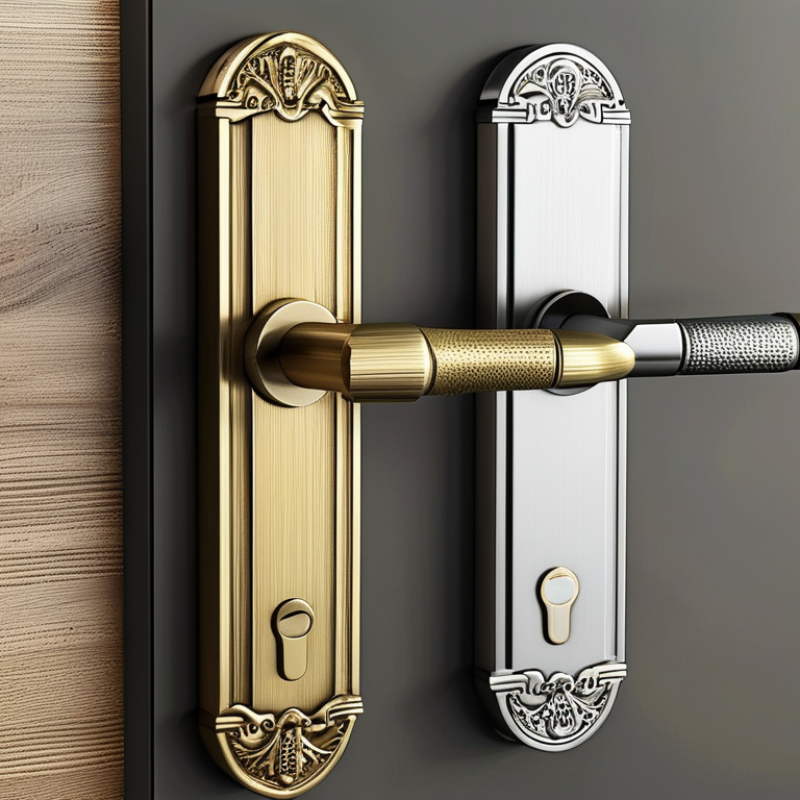
2026 Best Knurled Door Handle Types for Global Buyers

Knurled Door Handle Types: Pulls, Levers, Backplates, and Rosettes

In 2026, global buyers are choosing knurled door handles for grip, texture, and visual character. The small raised pattern feels secure under wet or gloved hands. However, texture depth matters. Excessively sharp knurling can catch clothing and feel uncomfortable during frequent use. I have found that a sample handle reveals more than a product photograph.

Knurled pulls suit sliding doors, tall entry doors, and large cabinet-style openings. Their straight profile gives users clear leverage without a complicated mechanism. Knurled levers work better where one-hand operation is important. Check the return angle, spindle fit, and clearance behind the grip. A lever that looks elegant may still strike nearby trim. That mistake is easy to miss.

Backplates provide a larger visual frame and can help cover old fixing marks. They suit traditional interiors or doors requiring stronger design emphasis. Rosettes create a lighter appearance around the lever or knob. Round rosettes soften modern doors, while square versions create sharper architectural lines. Match the fixing method to the door thickness and substrate. Test alignment before final installation. Small errors show quickly. Finishes also deserve practical testing. Salt air, frequent cleaning, and strong sunlight can change surface performance. Ask for coating details, maintenance guidance, and replacement components. I would not approve a large order without checking several samples by hand. Even reliable specifications can overlook installation conditions.

ANSI/BHMA Grades 1–3: Matching Durability to Door Traffic

A knurled door handle combines a practical grip with a distinctive architectural texture. Its ridged surface helps reduce slipping, especially when hands are wet, gloved, or carrying packages. Common options include knurled levers, round knobs, pull handles, and back-to-back sets. Each type suits a different door movement and traffic pattern.

ANSI/BHMA Grade 1 is designed for the heaviest traffic. It fits hospitals, schools, transport facilities, and busy commercial entrances. Grade 2 suits offices, apartments, restaurants, and moderate-use public doors. Grade 3 is generally appropriate for light residential traffic, such as bedrooms or private studies. The grade measures durability and operating performance, not the handle’s appearance. Exact cycle requirements can vary by hardware category, so buyers should check the complete test specification.

Door weight, closer force, lock compatibility, and mounting strength also affect performance. A strong Grade 1 handle may still feel poor on a flexible or badly aligned door. I have seen buyers focus on the knurling depth and overlook the fixing screws. That mistake becomes obvious after repeated daily use. Deep knurling can provide excellent traction, but it may collect dust in workshops or coastal buildings. A finer pattern is easier to clean, though sometimes less secure with wet hands. This trade-off deserves practical testing. Open and close a sample repeatedly, inspect the spindle, and check whether the grip remains comfortable after several minutes. Safety matters too; sharp ridges and exposed fasteners should never be treated as decorative details.

EN 1906 Classes 4–7: Cycle Ratings for Global Specification

For global buyers, knurled door handles should be specified by tested durability, not appearance alone. Under EN 1906, durability grades 4 to 7 correspond to 25,000, 50,000, 100,000, and 200,000 operating cycles. That range separates light commercial use from demanding public environments. Cycle rating matters.

Grade 4 may suit controlled traffic, such as small offices or private accommodation. Grade 5 offers a stronger margin for busy commercial interiors. Grades 6 and 7 are better references for schools, healthcare areas, transport buildings, and high-traffic entrances. The handle must complete the test without functional failure, excessive looseness, or unsafe release. Knurled surfaces improve tactile control, especially with wet or gloved hands, but they do not raise the cycle class.

During specification reviews, I check the complete fitting, not only the lever. Screws, spindle, lock case, fixing method, and door weight can change real performance. Ask for the tested configuration and the declared EN 1906 grade. Do not assume a grade on one component covers every assembly. This is where many neat schedules become uncertain. Local accessibility, fire, corrosion, and environmental rules still require separate verification. A 200,000-cycle claim sounds decisive, yet installation quality can undermine it. That detail deserves more attention.

2026 Best Knurled Door Handle Types for Global Buyers - EN 1906 Classes 4–7: Cycle Ratings for Global Specification

Knurled Door Handle Selection Matrix for International Specifications
Handle Type Typical Application Common Mounting Recommended EN 1906 Grade Durability Benchmark Key Specification Considerations
Straight Knurled Lever on Rose Office interiors, apartments, hotels and general commercial doors Rose with concealed fixings Grade 3–4 100,000–200,000 test cycles Specify return-to-door geometry, spring assistance, spindle size, rose diameter and corrosion resistance.
Curved Knurled Lever Residential projects, hospitality rooms and assisted-use interiors Rose or backplate Grade 2–4 50,000–200,000 test cycles Check lever projection, clearance from adjacent walls and compatibility with the selected latch or lock case.
Offset Knurled Lever High-traffic offices, schools, healthcare and public buildings Heavy-duty rose or backplate Grade 4 200,000 test cycles Confirm load-bearing fixing, return spring performance, door thickness range and accessibility requirements.
Knurled Lever on Backplate Traditional interiors, retrofit work and doors requiring cylinder concealment Long or short backplate Grade 3–4 100,000–200,000 test cycles Match the profile to the lock, euro-profile cylinder, oval cylinder or keyhole configuration used in the target market.
Knurled Pull Handle Entrance doors, glass doors, pivot doors and commercial reception areas Through-bolted or surface-fixed Product-specific; EN 1906 may not apply to every pull-handle assembly Verify manufacturer test evidence Specify pull length, projection, fixing centres, substrate, door thickness and required corrosion category.
Knurled Privacy Lever Set Bedrooms, bathrooms, hotel rooms and residential privacy applications Rose with privacy turn-and-release Grade 2–3 50,000–100,000 test cycles Include emergency release, indicator requirements, lock compatibility and local fire-door restrictions where applicable.
Heavy-Duty Knurled Lever Transport facilities, hospitals, schools and continuously used public doors Reinforced rose with through-fixings Grade 4 200,000 test cycles Require tested spring cassette, robust spindle retention, anti-loosening fixings and suitable surface durability.
EN 1906 classification note: EN 1906 uses durability Grades 1–4. Grade 1 corresponds to 25,000 test cycles, Grade 2 to 50,000 cycles, Grade 3 to 100,000 cycles, and Grade 4 to 200,000 cycles. “Classes 5–7” are not official EN 1906 durability grades; any specification using these values should request the applicable test standard and independent evidence.

ADA’s 5-lb Opening-Force Limit: Grip, Clearance, and Accessibility

For global buyers, knurled door handles must support reliable access, not only visual appeal. Under ADA guidance, many interior, non-fire doors should require no more than 5 pounds of opening force. This force is measured at the operating hardware. A textured grip can improve control for wet or low-strength hands. However, overly sharp knurling may create pressure points and discomfort.

Opening force also depends on hinges, closers, seals, latches, and air pressure. The handle is only one part of the system. Select a shape that allows one-hand operation without tight pinching, twisting, or excessive wrist movement. Provide enough clearance around the grip and door edge. A large hand, a gloved hand, or a mobility aid needs practical room. Local accessibility rules may differ from ADA requirements, so buyers should confirm details with a qualified professional. A catalog claim is not a field test. That deserves honest attention.

Tips: Test a complete door assembly with a force gauge. Check the force before and after installation. Try the handle with wet hands and limited finger strength. Review the knurl depth carefully; more texture is not always more accessible. Small details matter.

304 vs 316 Stainless Steel: Corrosion Resistance for Climate Zones

2026 Best Knurled Door Handle Types for Global Buyers

304 and 316 stainless steel can look identical, but climate exposure changes their performance. Grade 304 suits many inland buildings with moderate humidity and limited salt contact. Its brushed surface is practical for offices, apartments, and retail interiors. Grade 316 contains molybdenum, improving resistance to chloride corrosion. It is usually safer near coastlines, marinas, swimming pools, and roads treated with deicing salt.

A knurled handle adds grip, but its grooves can retain moisture, dust, or cleaning chemicals. That detail matters in tropical climates with frequent rain. It also matters in cold regions where salt residue stays around the mounting plate. In site inspections, corrosion often begins at hidden threads or poorly sealed joints, not across the visible handle. A neat grade chart can mislead. Installation quality still matters. Buyers should request material certificates, salt-spray data, and clear information about surface finishing. These documents cannot predict every building condition, but they improve purchasing decisions.

Tips: Match 304 with sheltered, inland use. Choose 316 for marine air, pool areas, and heavy salt exposure. Wipe grooves regularly with clean water, then dry them. Avoid harsh chlorine cleaners. Check the fixing area after several months, because early staining may reveal trapped moisture. Be careful with mixed metals, too; contact between dissimilar materials can accelerate localized corrosion.

2026 Best Knurled Door Handle Types for Global Buyers: 304 vs 316 Stainless Steel

The chart compares the lower-bound specification values for chromium, nickel, and molybdenum in 304 and 316 stainless steel. The molybdenum content of 316 stainless steel improves resistance to chloride-related corrosion, making it the preferred choice for coastal, marine, de-icing salt, and many industrial environments.

Material values are based on commonly specified chemical composition limits in ASTM A240 and EN 10088-2. Actual performance also depends on surface finish, fabrication, cleaning, crevice design, and exposure conditions.

Smart Robotics brand movie

Watch video