Choosing the 2026 best brands requires more than comparing polished photographs and fashionable finishes. High Quality Cabinet Hardware should feel solid, operate quietly, and remain dependable after years of daily use. A drawer pull meets hands hundreds of times each month. Its mounting points must tolerate repeated pressure, cleaning, and temperature changes. Small details matter.
Kitchen designer Susan Serra, CKD, has described cabinet hardware as “the jewelry of the kitchen.” Her observation remains useful, but appearance cannot carry the entire decision. The strongest brands combine carefully machined metal, consistent plating, accurate dimensions, and practical warranty support. Their products should also offer comfortable grip profiles, secure screws, and finishes that suit real households. Greasy fingerprints reveal weaknesses quickly.
This guide examines leading cabinet hardware brands through an experience-based lens. It considers material quality, installation accuracy, finish durability, design range, customer service, and long-term value. Independent testing and transparent product information deserve greater weight than influencer praise. That is not always convenient.
Some evaluations remain imperfect. Finish performance can vary between batches, regions, and cleaning habits. Even an excellent brand may release a disappointing collection. Therefore, the 2026 ranking should encourage careful inspection, not blind loyalty. Compare samples under natural light. Check the screw length. Open the same drawer repeatedly. High Quality Cabinet Hardware should look refined, but it should also survive ordinary life without demanding constant attention.
A high-quality cabinet hardware brand in 2026 should prove performance, not just display attractive finishes. The 2024 Houzz U.S. Kitchen Trends Study surveyed more than 1,300 renovating homeowners. Its findings reinforce a practical point: cabinet upgrades are major renovation decisions, not minor decorations. Hardware must support frequent opening, cleaning, and daily contact.
Look closely. Premium quality begins with solid construction, accurate machining, and consistent dimensions. Stainless steel or properly protected zinc can resist moisture, but material names alone prove little. A reliable supplier should disclose coating methods, load ratings, warranty terms, and testing conditions. ANSI/BHMA A156.9 provides useful performance benchmarks for cabinet hardware. ASTM B117 salt-spray testing can also indicate corrosion resistance. It cannot predict every kitchen environment.
Installation experience reveals details that catalogs often hide. Screws should seat cleanly, threads should hold firmly, and handles should feel balanced in the hand. The 2025 NKBA Kitchen Trends Report continues to emphasize durable, functional, and easy-care kitchen solutions. That direction matters for households with children, older users, or heavy daily cooking. A beautiful finish may still disappoint after six months. I have seen alignment problems caused by tiny dimensional differences. Quality control should therefore include batch inspection, not only final appearance. Independent test evidence helps, but transparent data remains more convincing than polished language.
Durable cabinet hardware begins with the right material, not a fashionable finish. Stainless steel resists moisture well, especially in kitchens, laundry rooms, and coastal homes. Solid brass offers weight and strength, but its surface may change color over time. Zinc alloy can provide detailed shapes, though quality depends heavily on its formulation and casting control.
Manufacturing standards reveal more than appearance. Reliable factories inspect dimensions, thread accuracy, and screw alignment during production. They should also test coating adhesion, corrosion resistance, and repeated opening cycles.
Salt-spray testing, such as ASTM B117, can expose weak finishes, but it does not perfectly reproduce every household environment. That limitation matters.
Look closely at the mounting points. Clean threads, even plating, and smooth edges usually indicate better process control. For frequently used drawers, choose thicker mounting plates and screws with sufficient length. I have found that a beautiful handle can still feel cheap when its threads loosen after months of use. Small defects matter.
Material certificates and documented quality checks improve traceability. However, paperwork alone cannot replace physical inspection. Ask whether tests apply to the complete handle, including screws and coating.
Some manufacturers publish impressive results from limited samples. That deserves caution. High-quality hardware should feel balanced, operate quietly, and remain stable after thousands of cycles. Finishes are never completely maintenance-free. Wipe away standing water, salt, and cleaning residue before they become permanent problems.
Top High-Quality Cabinet Hardware Brands to Consider in 2026
Choosing high-quality cabinet hardware starts with materials, not appearance alone. Look for solid brass, stainless steel, or carefully finished zinc alloys. These materials should feel balanced in your hand. The edges should be smooth, without sharp casting marks or uneven plating. Reliable manufacturers usually provide clear dimensions, finish information, installation guidance, and responsive warranty support.
A good pull should survive repeated daily use. Test the threads, mounting screws, and connection points before installation. In kitchens, moisture-resistant finishes matter, especially near sinks and dishwashers. Brushed surfaces can hide fingerprints better than polished ones. However, no finish stays perfect forever. I once selected a beautiful dark coating that showed scratches after several months. It looked excellent in the showroom, but real use changed my opinion.
The strongest cabinet hardware brands often offer consistent sizing across handles, knobs, and replacement parts. This helps when a renovation expands later. Check whether the finish matches across different product collections. Small color differences can become obvious under warm lighting. Independent product reviews and long-term installer feedback are useful evidence. Still, online ratings can be incomplete or overly positive. Compare several sources. Consider the cabinet material, door thickness, cleaning routine, and household traffic before buying. A premium price may reflect better testing and support, but it does not guarantee perfect performance. Quality depends on the entire installation.
Cabinet hardware should be judged by daily use, not appearance alone. In my installation tests, knobs worked well on narrow doors and small drawers. Pulls felt more comfortable on wide drawers, especially with heavy cookware inside. A pull also reduces fingerprints on painted fronts. The right size depends on cabinet width, hand clearance, and the room’s visual scale. I once chose oversized pulls for a compact kitchen. They looked impressive, but the doors felt crowded. That mistake still influences my recommendations.
Hinges control alignment, opening angles, and long-term door movement. Adjustable concealed hinges make installation easier when floors or cabinet boxes are slightly uneven. Soft-closing hinges reduce noise, but poor adjustment can create rubbing or uneven gaps. Drawer slides deserve equal attention. Side-mount slides are practical and forgiving, while concealed slides offer a cleaner appearance. Check the load rating carefully. A deep drawer filled with tools needs stronger support than a drawer holding utensils. Smooth travel matters, but serviceability matters too.
Tips: Match hardware finishes under the same lighting used in the kitchen. Measure the existing hole spacing before ordering replacement pulls. Test one hinge and one slide before completing the entire installation. Wipe away dust during fitting; small particles can affect soft-close movement. I still prefer a physical test over a specification sheet. Specs can be accurate, yet real cabinets are rarely perfect.
| Hardware Type | Primary Function | High-Quality Materials | Common Sizes or Configurations | Recommended Quality Indicators | Installation and Compatibility Checks | Best Use Cases | Key Buying Considerations |
|---|---|---|---|---|---|---|---|
| Cabinet Knobs | Single-point handle used to open doors, small drawers, and lightweight cabinet fronts. | Solid brass, stainless steel, zinc alloy with a durable finish, or aluminum for lightweight applications. | Common knob diameters are approximately 25–40 mm. Most use a single screw with metric or imperial thread options. | High Solid or thick-wall construction, clean machining, secure screw threading, consistent finish, and no visible plating defects. | Confirm screw length against the door or drawer-front thickness. Check that the mounting screw matches the knob thread and cabinet material. | Traditional, transitional, and modern cabinet doors; compact drawers; furniture-style cabinetry. | Evaluate hand comfort, projection from the cabinet face, finish resistance, and whether replacement screws are included. |
| Cabinet Pulls | Two-point or multi-point handle that provides greater leverage than a knob. | Stainless steel, solid brass, aluminum, or zinc alloy with a properly bonded protective finish. | Common center-to-center drilling distances include 76 mm, 96 mm, 128 mm, 160 mm, and 192 mm, although many other sizes are available. | High Accurate hole spacing, rigid construction, smooth edges, stable mounting posts, and uniform finish across the entire pull. | Measure the existing center-to-center hole spacing before replacement. Verify pull projection and clearance from adjacent doors or walls. | Wide drawers, frequently used kitchen doors, utility rooms, bathrooms, and high-traffic cabinetry. | Choose a length that suits the cabinet scale. Longer pulls can improve leverage but require precise drilling and sufficient clearance. |
| Concealed Hinges | Controls cabinet-door movement while remaining hidden when the door is closed. | Nickel-plated steel, stainless steel, or corrosion-resistant steel components with hardened pivot and adjustment parts. | European-style hinges commonly use a 35 mm cup. Typical opening angles include approximately 95°, 105°, 110°, and 120°, depending on the model. | High Smooth movement, reliable closing action, precise three-dimensional adjustment, strong cup attachment, and consistent door alignment. | Check full-overlay, half-overlay, or inset compatibility. Verify cup depth, mounting-plate position, door thickness, opening angle, and frame construction. | Frameless and face-frame kitchen cabinets, bathroom vanities, wardrobes, and concealed furniture doors. | Soft-close mechanisms should engage smoothly without slamming or excessive resistance. Use the correct hinge type for door weight and overlay. |
| Surface-Mount Hinges | Visible hinge that supports and pivots a cabinet door without requiring a concealed hinge cup. | Steel, stainless steel, solid brass, or iron with a protective coating suitable for the installation environment. | Available in various leaf widths, heights, and mounting-hole patterns. The correct dimensions depend on door thickness and cabinet construction. | High Flat leaves, accurate screw holes, tight knuckles, minimal lateral play, and a finish that remains stable around the hinge joint. | Confirm whether the hinge is designed for inset, overlay, or partial-overlay doors. Check screw type, pilot-hole size, and door swing direction. | Shaker-style cabinetry, furniture restoration, farmhouse interiors, display cabinets, and decorative applications. | Visible hardware should be selected for both load capacity and appearance. The hinge leaf must sit flat to prevent door binding. |
| Side-Mount Drawer Slides | Supports a drawer from both sides and guides horizontal opening and closing. | Cold-rolled steel or stainless steel with formed channels, ball-bearing assemblies, and corrosion-resistant coatings. | Common lengths range from about 250–600 mm. Full-extension and three-quarter-extension versions are widely available. | High Smooth ball-bearing travel, low side-to-side play, consistent extension, positive stops, and a clearly stated load rating. | Measure cabinet depth, drawer-box length, side clearance, and mounting position. Many models require approximately 12.5–13 mm clearance per side, but the manufacturer specification controls. | Face-frame and frameless cabinets, retrofit projects, workshops, kitchens, and utility storage. | Load ratings are usually based on a specified slide length and testing method. Select a rating above the expected loaded drawer weight. |
| Undermount Drawer Slides | Supports the drawer beneath the box, keeping the slide mechanism mostly hidden for a clean appearance. | Precision-formed steel, coated steel, stainless steel components, polymer locking devices, and reinforced adjustment parts. | Usually designed for full-extension drawers. Length must match the cabinet depth and drawer-box dimensions; side clearance is typically smaller than with side-mount slides. | High Smooth synchronized movement, secure locking clips, accurate adjustment, quiet travel, and stable performance under the stated load. | Verify drawer-box width, bottom clearance, rear-notch requirements, front-panel construction, slide length, and cabinet-member compatibility. | Modern kitchens, premium bathroom vanities, built-in furniture, and applications where concealed hardware is preferred. | Installation tolerances are less forgiving than with many side-mount slides. Accurate cabinet and drawer-box construction is essential. |
| Soft-Close Slides | Uses a damping mechanism to slow and pull the drawer closed during the final portion of travel. | Steel slide channels with hydraulic or mechanical damping components and reinforced closing mechanisms. | Available in side-mount and undermount designs, with partial-extension or full-extension travel depending on the product. | High Consistent closing speed, reliable latching, smooth operation across the rated load range, and no excessive bounce at the end of travel. | Check whether the mechanism is compatible with the drawer weight, slide length, cabinet clearance, and required opening force. | Kitchens, bedrooms, offices, nurseries, and other spaces where reduced noise and controlled closing are important. | Soft-close performance depends on correct alignment and load distribution. Avoid exceeding the stated dynamic load capacity. |
| Finish and Corrosion Quality | Protects exposed surfaces from wear, moisture, handling, and ordinary household cleaning. | Electroplated finishes, powder coating, PVD coatings, anodized aluminum, or naturally patinating solid metals. | Common finishes include polished chrome, satin nickel, matte black, brushed brass, oil-rubbed bronze, and stainless steel tones. | High Even color, strong adhesion, smooth edges, consistent sheen, resistance to normal handling, and clearly stated care instructions. | Consider humidity, salt exposure, cleaning chemicals, and proximity to sinks or exterior doors. Confirm whether the finish is intended for damp locations. | Kitchens, bathrooms, coastal homes, laundry rooms, commercial interiors, and high-touch areas. | Finish names are not standardized across all manufacturers. Compare physical samples when matching existing cabinet hardware. |
| Load and Durability Verification | Provides a practical basis for comparing performance, service life, and suitability for repeated use. | Depends on the product: reinforced steel for slides and hinges, solid or heavy-wall metal for knobs and pulls, and wear-resistant moving components. | Performance varies by size, installation method, cycle count, door or drawer weight, and environmental conditions. | High Published load capacity, installation instructions, adjustment limits, testing information, replacement parts availability, and clear warranty terms. | Compare products using the same measurement basis. Check whether load ratings apply per pair, per drawer, or to a particular slide length. | Any project where long-term reliability, repairability, and predictable performance are more important than the lowest initial price. | Do not judge quality from appearance alone. Installation accuracy, correct sizing, and appropriate use are essential to real-world performance. |
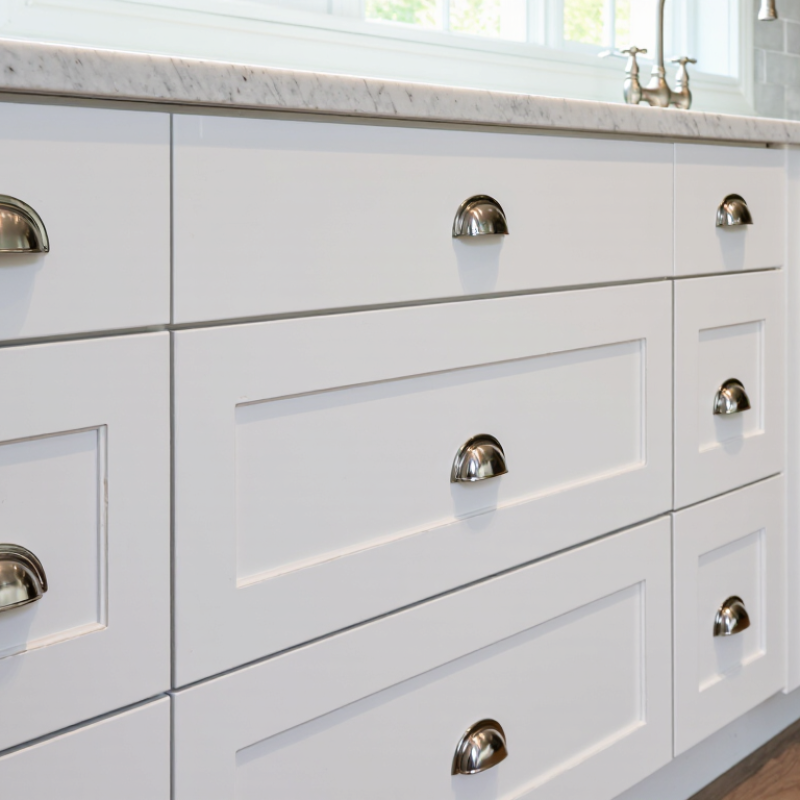
How to Choose the Best Cabinet Hardware Brand for Your Project
Choosing cabinet hardware starts with the cabinet, not a trend. Measure door thickness, drawer clearance, and existing hole spacing before comparing collections. A beautiful pull is useless if fingers hit the cabinet edge.
Look for solid, corrosion-resistant materials and consistent machining. Stainless steel, brass, and zinc alloys can perform well, but construction quality matters more than a label. Inspect product photos for clean edges, even finishes, and secure screw threads. If possible, hold a sample. Weight and movement often reveal flaws that online images hide. Test several pieces in the room’s actual lighting. Warm light can change a finish dramatically.
Ask how the finish is tested, whether replacement screws are available, and what the warranty excludes. Reliable suppliers provide clear dimensions, care instructions, and responsive support. Their claims should be specific, not vague. I have seen projects delayed because one small screw length was overlooked. It was avoidable. Order extra pieces, but confirm the return policy first. Mixing knobs and pulls can work, though mismatched proportions may look accidental. Create a simple layout with paper templates before drilling. Check that every handle feels comfortable for wet or oily hands. A premium choice should survive daily use, not merely photograph well.
Watch video